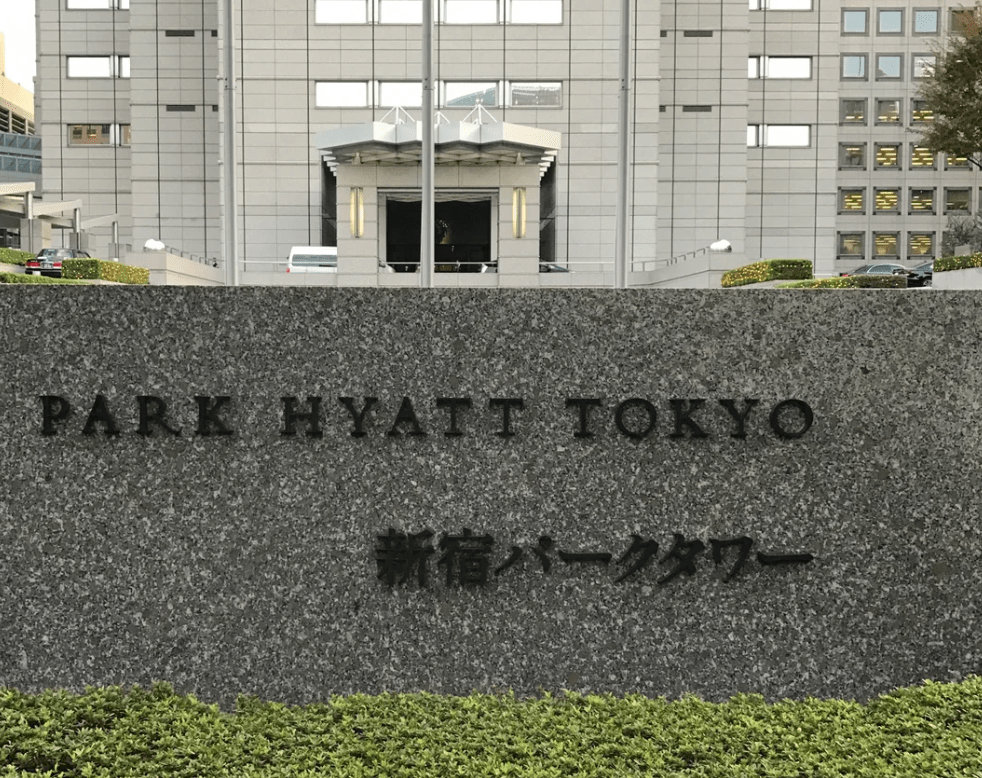
Why I came Back to the Park Hyatt Tokyo
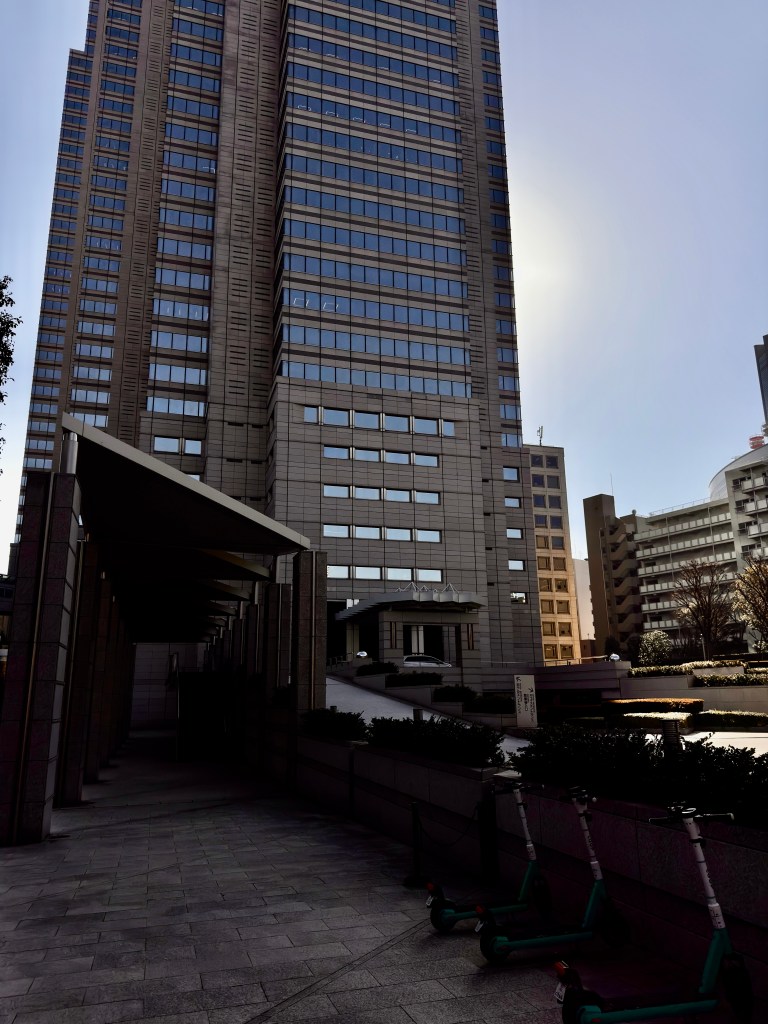
In May 2024, the Park Hyatt Tokyo closed its doors for a long overdue refurbishment. Eighteen months later, on December 9, 2025, it reopened. The timing worked in my favor. I had stayed here on my previous trip to Japan, and I found myself back in Tokyo again, this time for the Grand Sumo Tournament. The opportunity to return felt less like planning and more like inevitability.
I chose this hotel for two reasons, and I won’t pretend otherwise. First, I wanted to see what had actually changed. My last stay was good, but it never crossed into great. It lingered in that frustrating middle ground where expectations do more work than the experience. Second, and just as important, this hotel carries the quiet weight of Lost in Translation.
You might think a movie released more than two decades ago would have loosened its grip by now. It hasn’t. That film still functions as a kind of passport stamp for travelers who care less about thread counts and more about atmosphere.
One night in Golden Gai, wedged into a tiny bar barely wide enough for conversation, we met another traveler. He was in Japan for the first time. He hadn’t stayed at the Park Hyatt, but he talked about it the way people talk about places they hope will change them. His goal was simple. One night at the Park Hyatt Tokyo. Why? Lost in Translation. That was the reason. No loyalty status. No room category math. Just a movie that lodged itself somewhere deep and stayed there.
Back at the hotel, that same energy showed up again and again. At the New York Bar, you could hear it in low voices, people quietly pointing out where Bill Murray stood, where Scarlett Johansson leaned, where that familiar sense of isolation and connection played out on screen. Guests ordered the L.I.T cocktail from the menu not because it was the best drink in the room, but because it let them participate in the mythology.
This hotel knows exactly what role it plays. It isn’t just a place to sleep in Shinjuku. It’s a supporting character, one people keep returning to, hoping it still feels the same, while secretly wanting it to be better.
So the real question going into this stay wasn’t whether the Park Hyatt Tokyo had been renovated well. It was whether it finally learned how to live up to the story people still bring with them when they walk through the door.
What it Cost, and Why I Did it Anyway
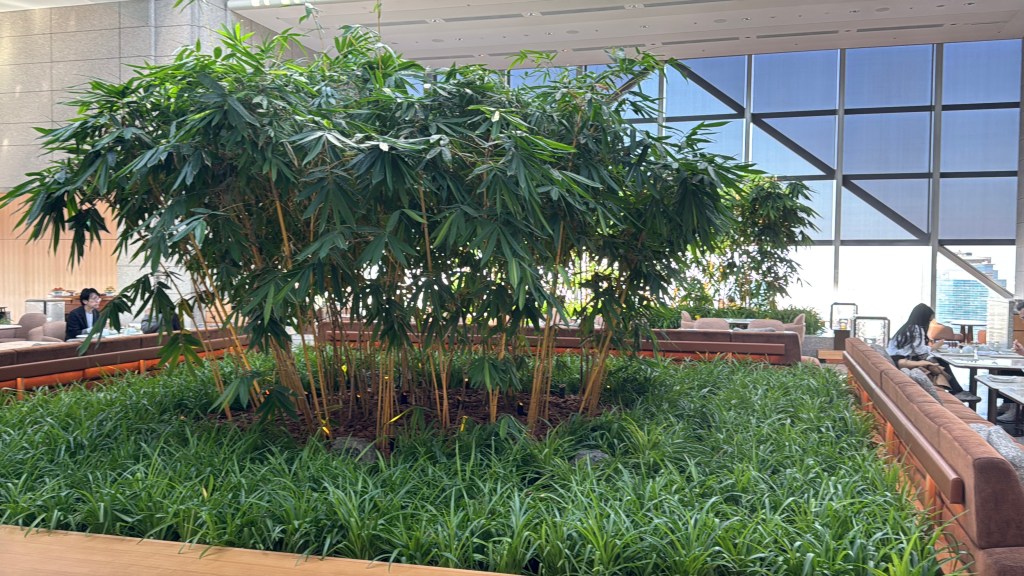
The Park Hyatt Tokyo has never been a bargain. It wasn’t a bargain two years ago, and it didn’t suddenly become one just because the yen softened against the dollar. This is still a Category 8 property, and Hyatt treats it accordingly. You don’t accidentally stay here. You plan for it. You commit to it. You accept that this is going to cost you something, either in cash, points, or sanity.
I knew I would be back in Japan in January 2026 for the Grand Sumo Tournament, and almost immediately, this hotel crept into the plan. Not loudly. Quietly. The way expensive ideas usually do. I had stayed here before and walked away conflicted. It was good, but it didn’t quite justify the mythology. That unfinished business stuck with me.
So I started saving points early. Methodically. Between the Chase Sapphire Reserve and the World of Hyatt Credit Card, I earn roughly 10,000 points a month. This wasn’t accidental spending. This was discipline. Small, boring choices made over time, all in service of one indulgent week in Tokyo.
Seven nights in a One King Bedroom Deluxe cost me 240,000 points. On paper, that number looks absurd. In reality, when you stack it up against the cash rates, it starts to feel less like excess and more like strategy. This is what points are for. If you’re not using them on stays like this, you might as well be collecting baseball cards.
Booking the room, though, was an event.
The hotel reopened reservations on December 9 at 9 a.m. Tokyo time. For me, that was late afternoon on December 8. Paying cash would have been easy. Rooms were there. Rates were visible. One click and done. Award space was another story entirely.
For hours, I rotated between my laptop, the Hyatt app, and Hyatt chat support like a gambler working three slot machines at once. Availability would flash, disappear, reappear, and vanish again. One night would open. Another would block. The system refused to cooperate long enough to let me stitch together a full seven-night stay.
Eventually, persistence won. After more refreshing than I care to admit, I locked in mid-January. We got lucky. Award availability evaporated fast, and by the end of the day, point bookings were gone through April. If you’re planning to do this, understand that patience is not optional. Neither is flexibility.
Of course, going this large isn’t required to enjoy Tokyo, and Hyatt gives you plenty of ways to scale this experience back without sacrificing quality.
The Hyatt Regency Tokyo is practical and efficient, the kind of hotel that works without asking much of you. Andaz Tokyo Toranomon Hills leans modern and polished, with a lighter, more playful energy. Hyatt Centric Ginza is perfect if your evenings tend to stretch late into the night. Hotel Toranomon Hills feels newer, sharper, and business-forward.
All of them are solid. All of them make sense. All of them ask far less of you.
The Park Hyatt Tokyo asks more. More planning. More points. More patience. Whether that tradeoff feels worth it depends entirely on what you’re hoping to feel when you step off the elevator and look out over the city.
That’s what I came back to find out.
Where it Sits, and How You Should Get There
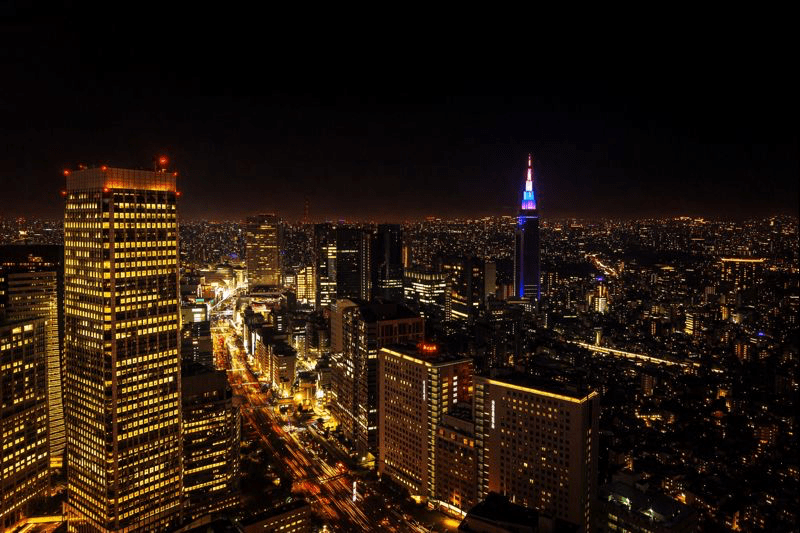
I’ve said this before, and it still holds. The Park Hyatt Tokyo sits in Shinjuku, one of the most convenient bases in the city if you plan to move around. You are close to major neighborhoods, shopping, dining, and transit lines that can take you almost anywhere you want to go. On paper, the location looks perfect.
What I wasn’t prepared for this time, and what you should know before booking, is that Shinjuku Station is under construction, and it will be for a while. This is not a minor inconvenience. Shinjuku Station is already the largest and busiest station in the world. Add construction, closed corridors, temporary exits, and rerouted foot traffic, and it becomes something else entirely.
For the first time since my very first trip to Tokyo, I got genuinely lost inside Shinjuku Station. Not momentarily confused. Lost. Exits I had memorized over multiple trips were sealed off. Familiar routes disappeared overnight. I spent my first two days second-guessing myself, doubling back, and checking signs that seemed to change daily. It wasn’t until the third day that I stopped relying on memory and accepted that this was a new station now. Once I did that, things clicked again.
Here’s the part that matters for you.
If you are arriving from Haneda or Narita with luggage, do not try to prove anything to yourself by taking the train all the way in. Dragging a suitcase through Shinjuku Station during construction is exhausting, frustrating, and completely unnecessary. Even if you know Tokyo well, this station will test your patience right now.
If you can afford to stay at the Park Hyatt Tokyo, you can afford a taxi from the airport. Take it. From Haneda or Narita, a taxi removes all friction. No stairs. No guessing which exit is open. No hauling bags through crowds while staring at overhead maps. You step out of the car and into the building. Your trip starts calm instead of chaotic.
The hotel can also arrange a private car pickup if you want to go all the way. It’s expensive, and you should know that upfront. You are paying for convenience, not speed. If that feels worth it to you, this is one of the few cities where it genuinely can be.
Shinjuku remains a strong location. The Park Hyatt remains well placed. Just understand the current reality on the ground, adjust your arrival plan accordingly, and save your energy for the city itself.
Arrival, Elevators, and the Long Way to a Room
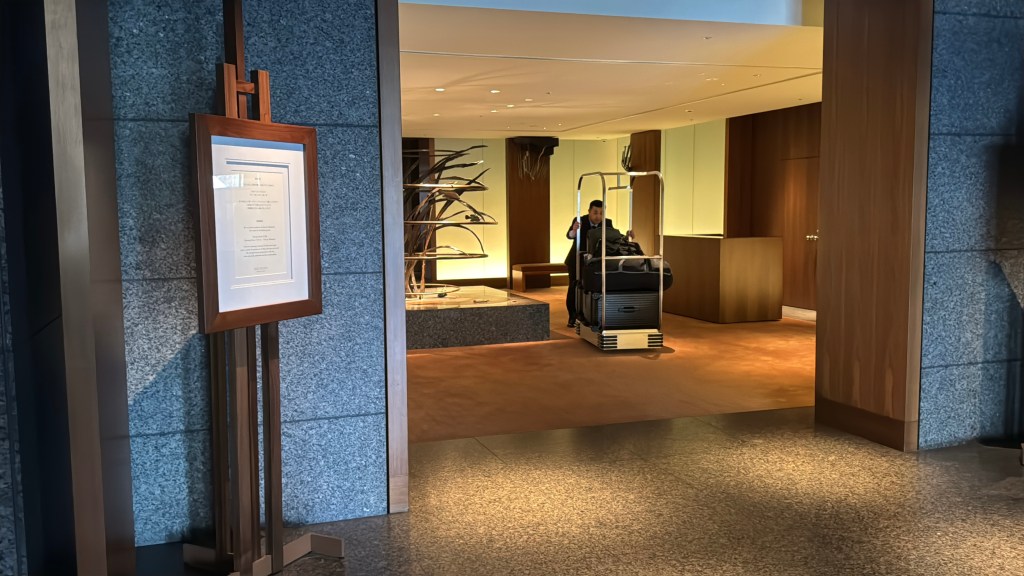
The Park Hyatt Tokyo does not let you arrive quietly. From the moment the taxi door opened, the Category 8 choreography kicked in. Names were confirmed. Bags disappeared. Coats were handled. Someone gently but confidently took control of the situation and guided us inside. You do not wander into this hotel. You are absorbed by it.
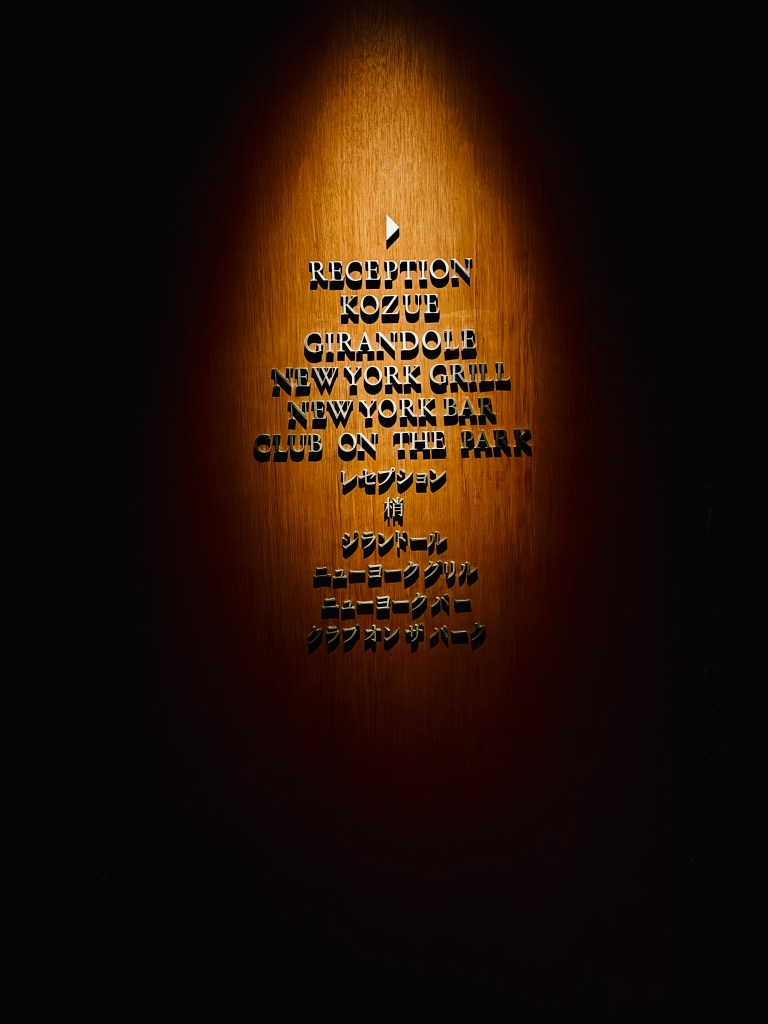
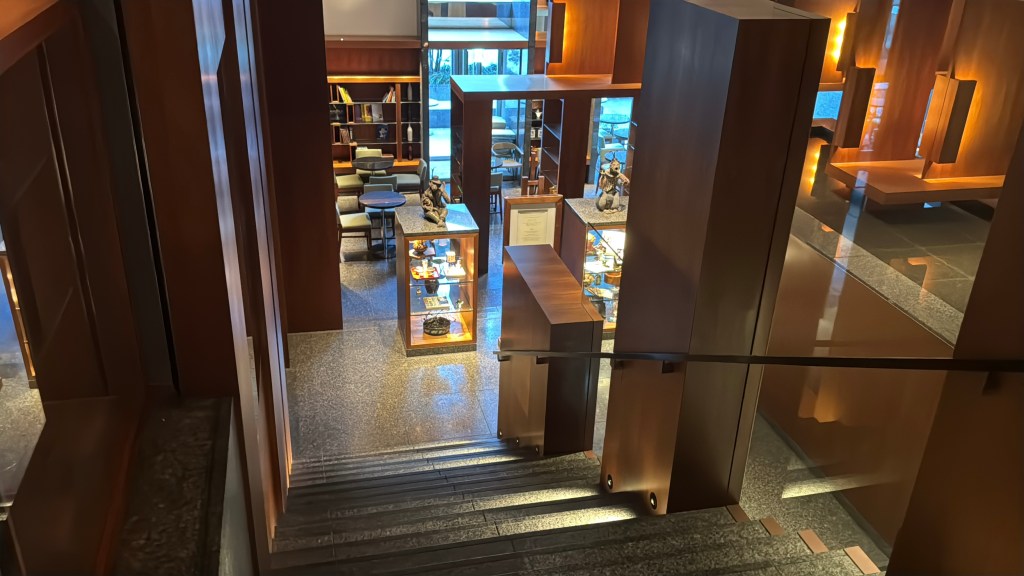
Getting to check-in is a journey in itself. From the front door, you cross the lobby and pass the pastry counter, which immediately tests your resolve after a long flight. Then you reach the first elevator. That ride takes you up to the 41st floor. When the doors open, the hotel begins to stretch out in front of you. You walk past the Peak Lounge Bar, the entrances to Kozue and Girandole, and the famous library. Floor-to-ceiling windows line the route, framing Tokyo in every direction. It feels deliberate. Like the hotel wants you to understand the scale of where you are before you’re allowed to sleep there.
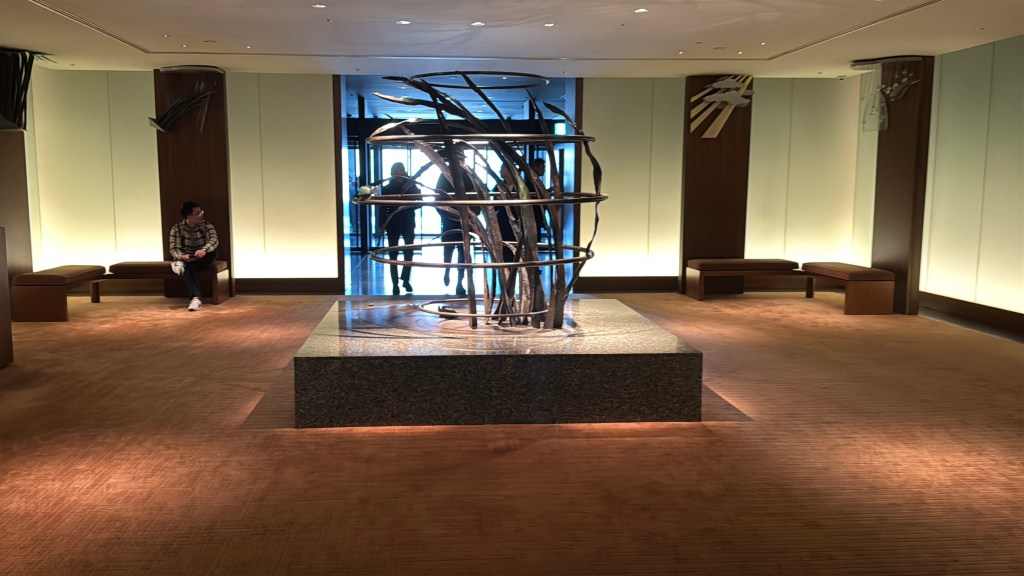
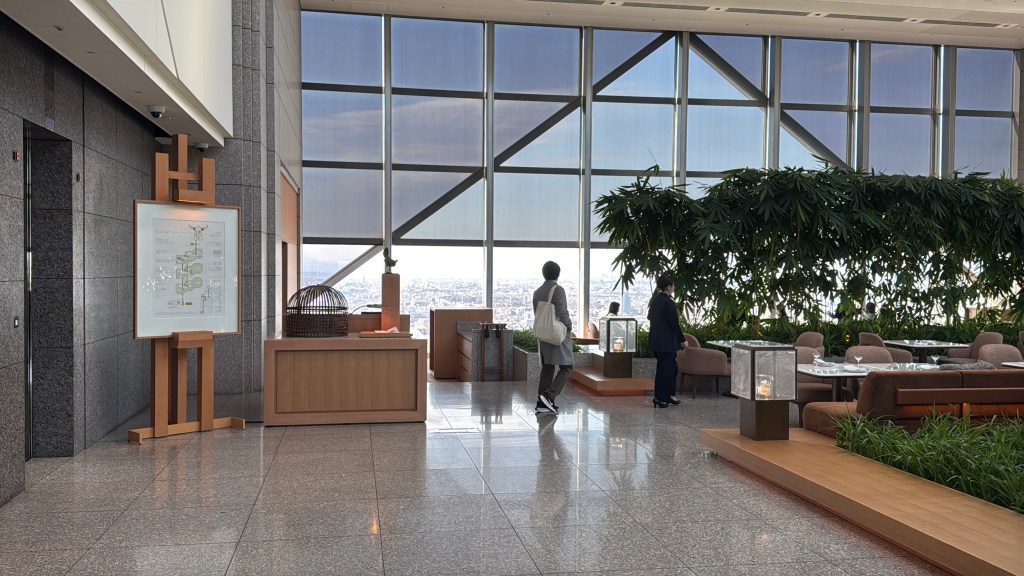
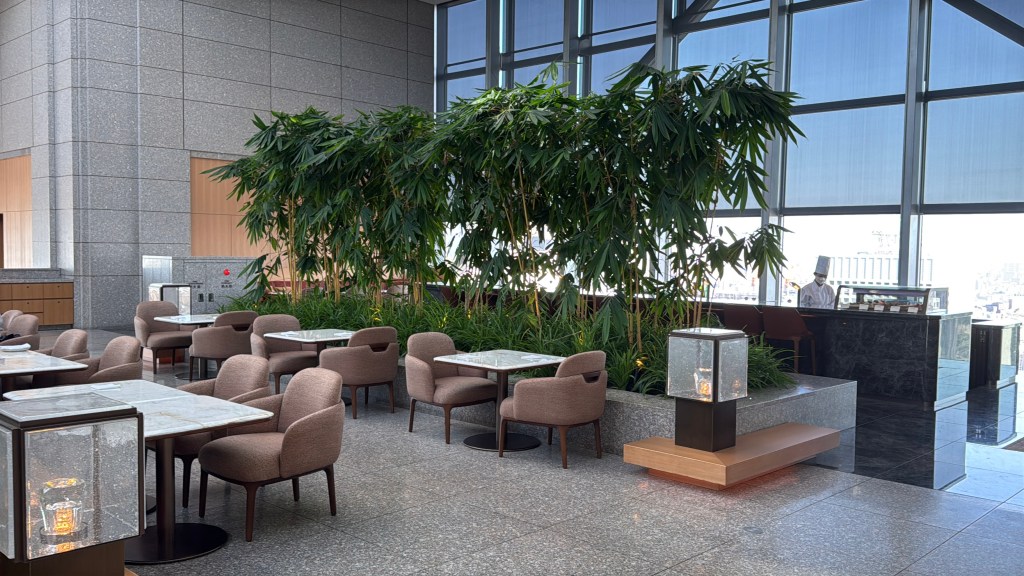
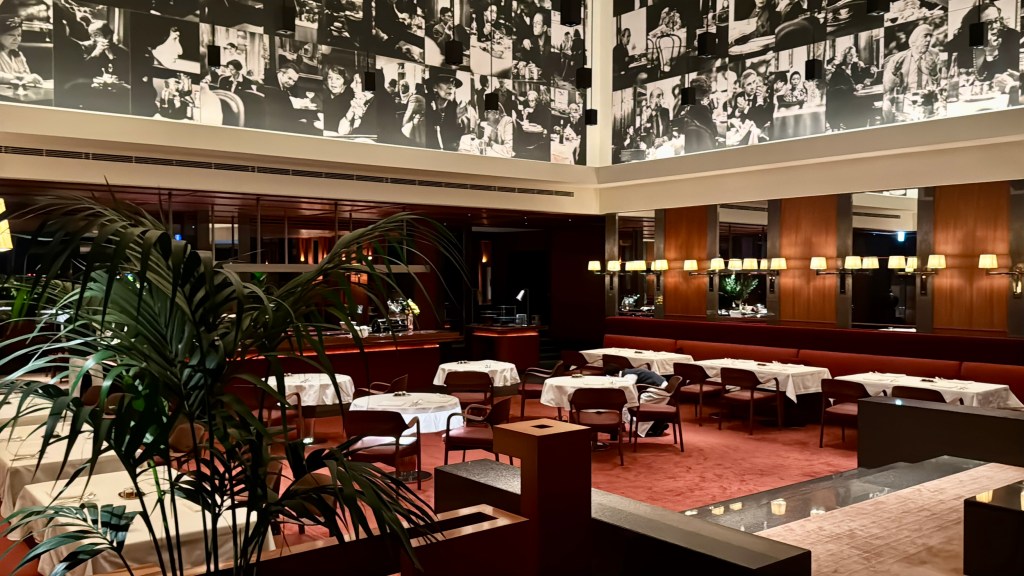
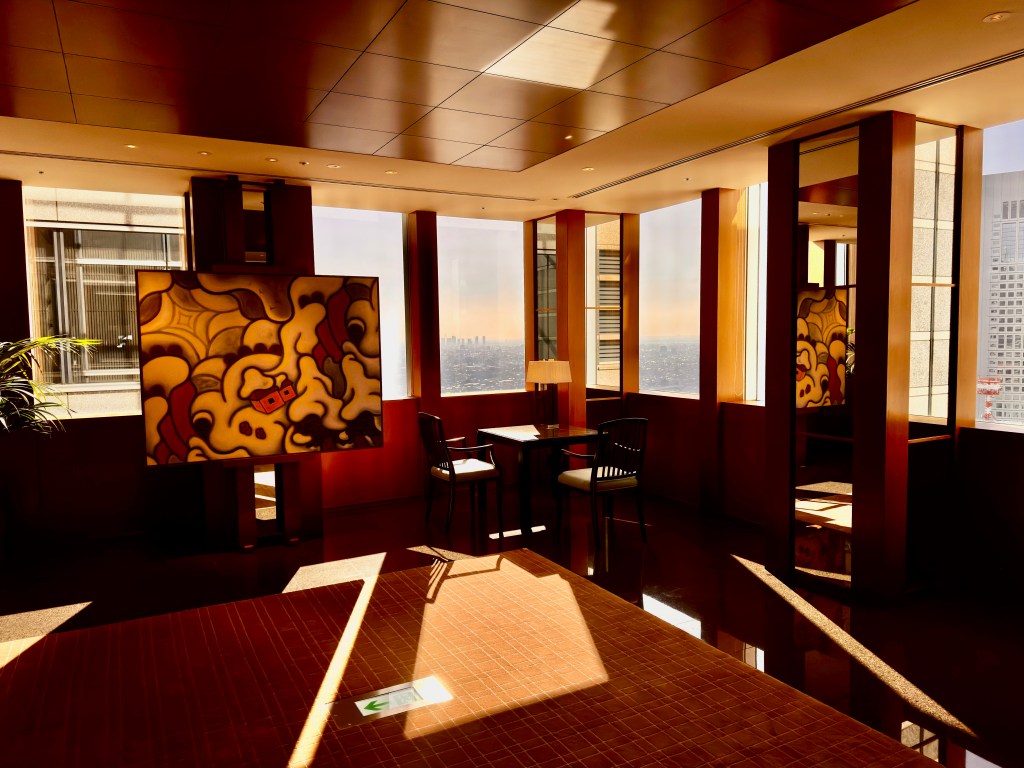
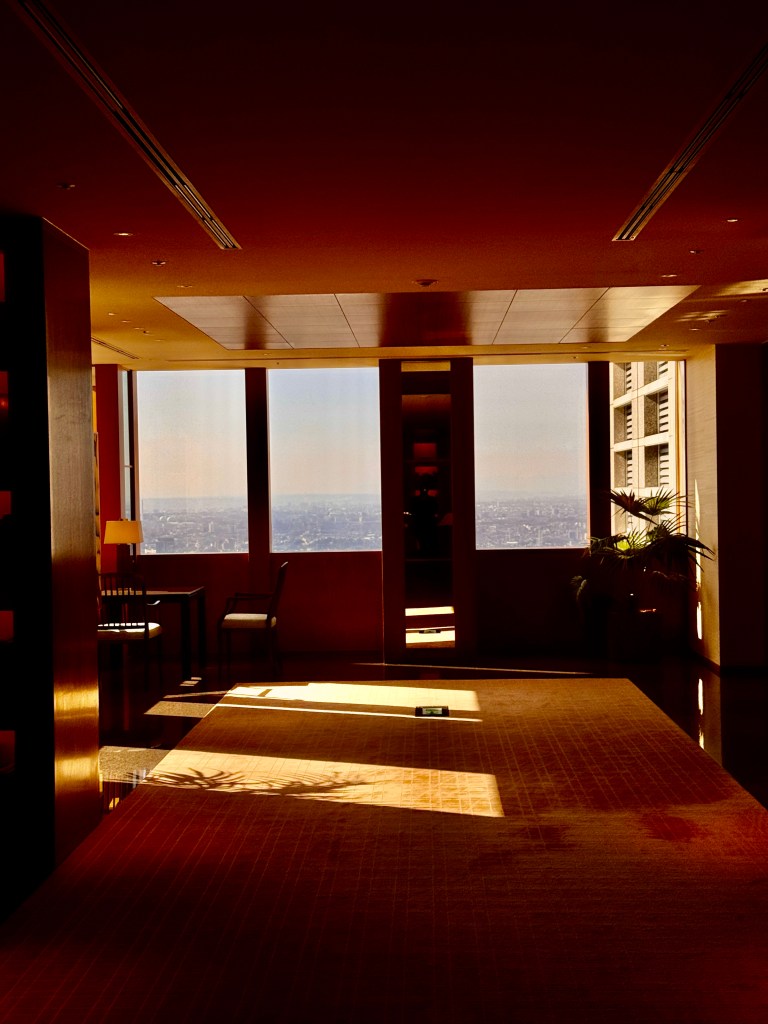
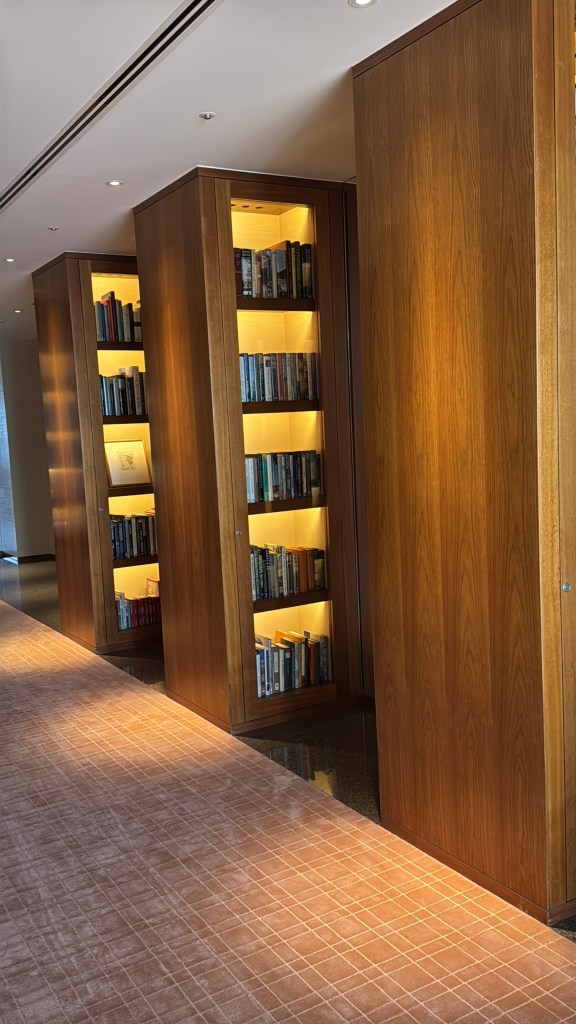
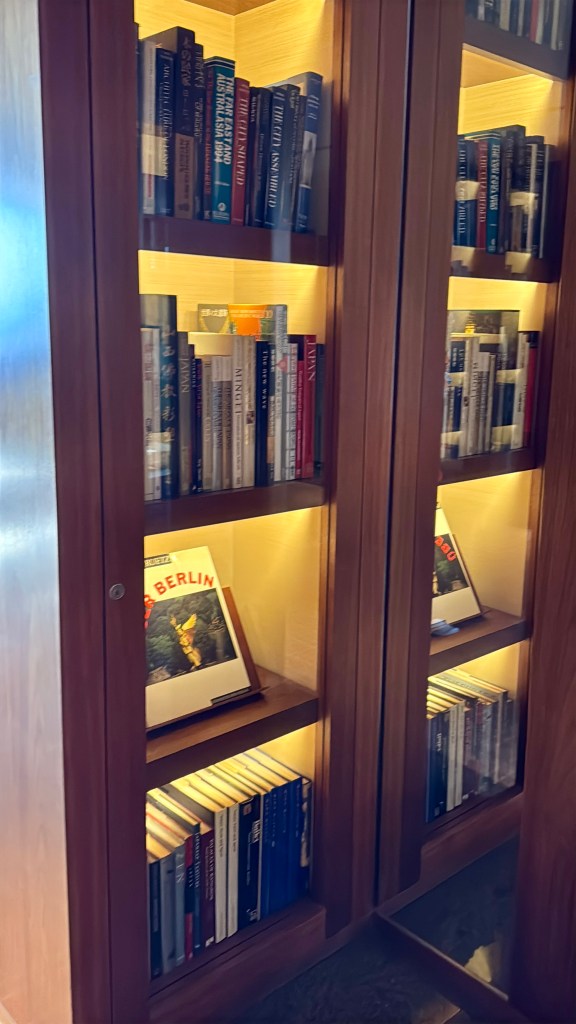
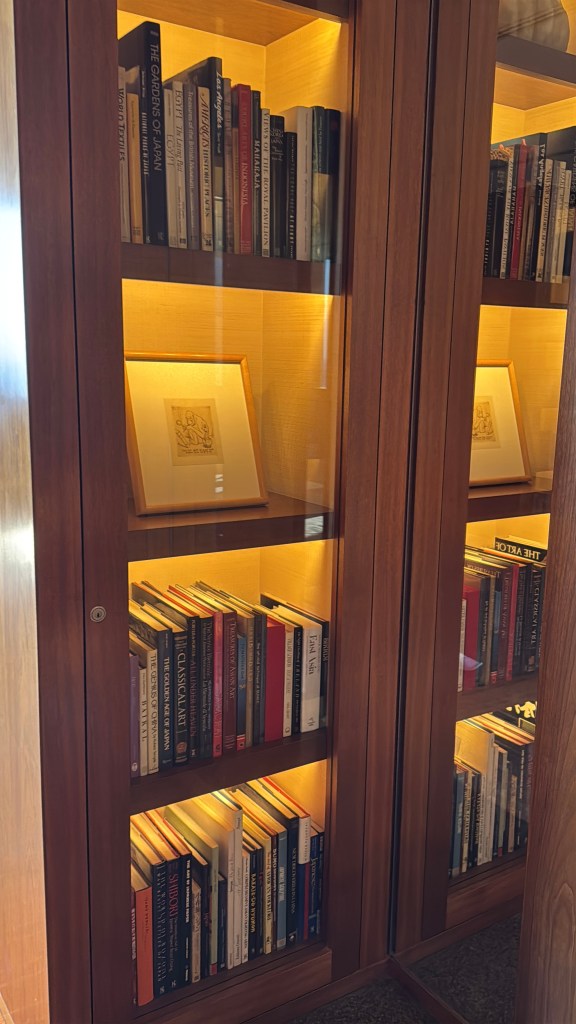
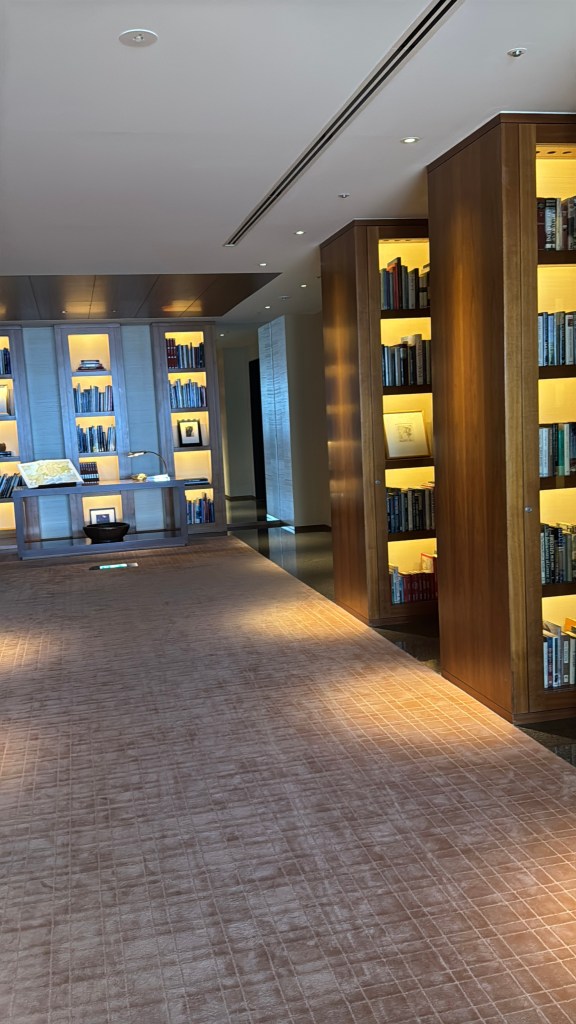
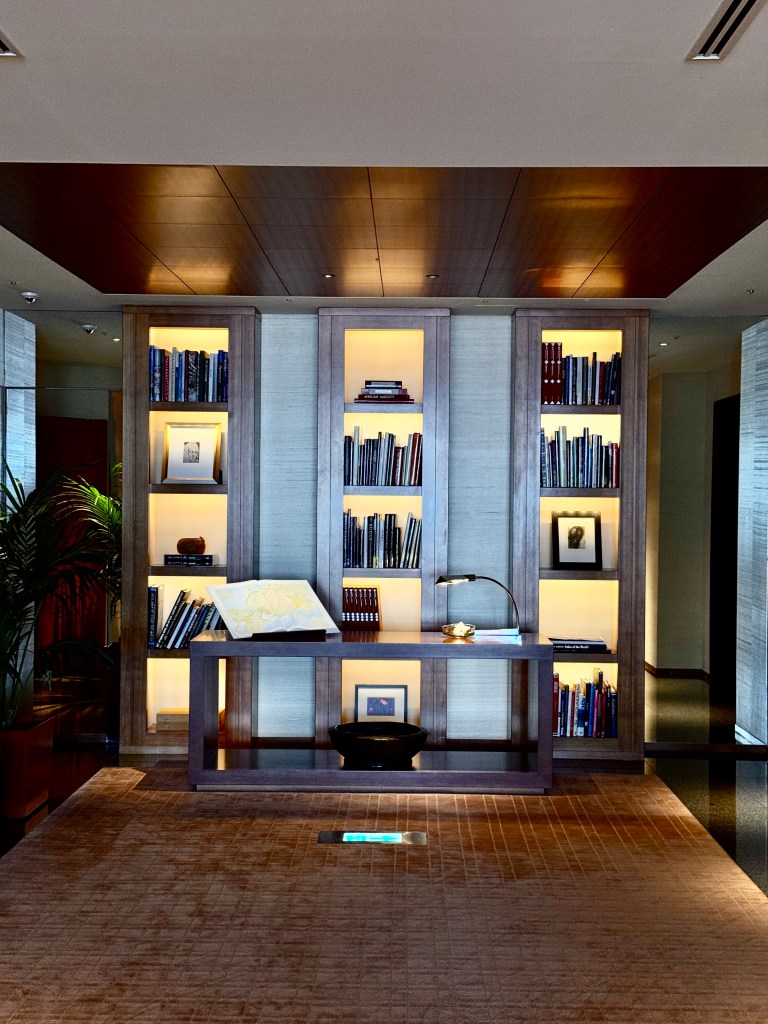
Only after all of that do you reach what functions as the front desk.
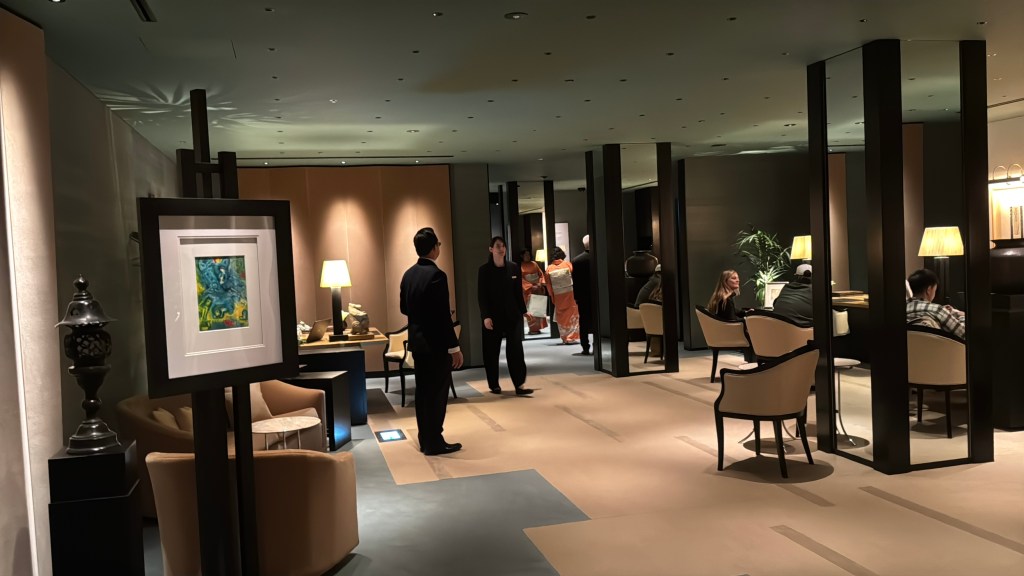
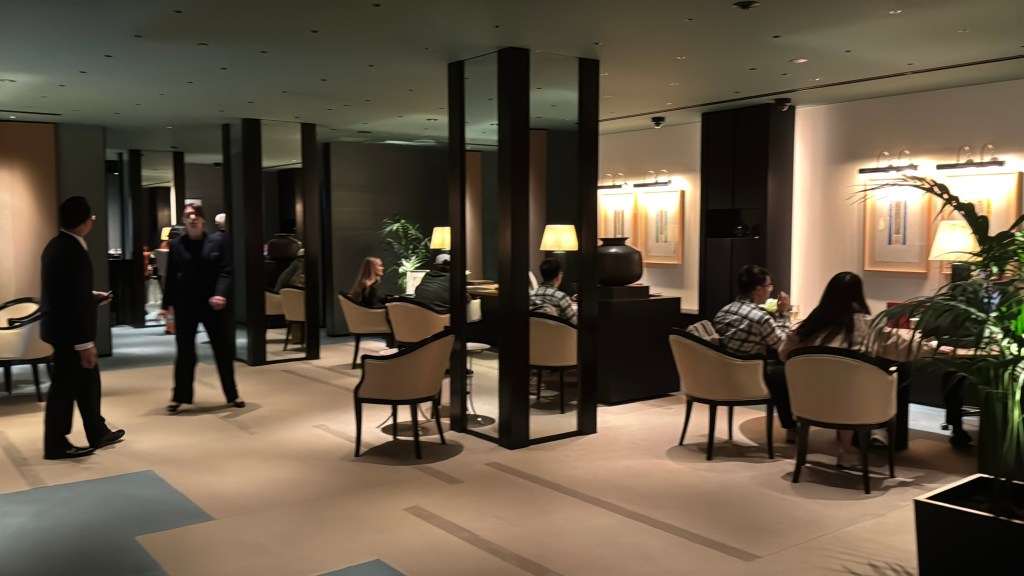
They seated us immediately. Coats were taken without discussion. Champagne arrived without asking. Check-in unfolded slowly and on purpose. Passports. Credit card. A clear explanation of charges. No rushing. No standing at a counter pretending you aren’t exhausted.
They explained one of the quieter perks of the stay. Every three days, the hotel offers complimentary treats, and you get to choose from a menu. Fruit and chocolate were options, but we went with Japanese beer and wine. It felt like the correct choice. Practical. Honest. Appreciated.
We asked about the pool, remembering the reservation process from past stays. That’s gone now. The gym and pool are open 24 hours. No sign-up sheets. No time slots. You show up when you want, which feels like a small but meaningful upgrade.
As Globalists, breakfast was included, and that now extends to the Japanese breakfast as well. After experiencing it at the Park Hyatt Kyoto, we were curious. They explained that it requires 24 hours’ notice and often sells out. Fair warning. If you want it, speak up early.
The entire check-in process took about twenty minutes. It moved slowly, but not inefficiently. The staff clearly wanted us to decompress, to arrive properly, to stop moving for a moment. I appreciated that. After a long journey, it felt humane. That said, if you’ve just come off a long-haul flight and your only priority is a shower, you may find yourself mentally urging things along.
Once everything was settled, they walked us to the room. Bags arrived a few minutes later, right on cue. No drama. No confusion. Just the quiet sense that someone had been paying attention the whole time.
That’s how the Park Hyatt Tokyo wants your stay to begin. Calm. Controlled. Slightly theatrical. And very intentional.
The Room, the View, and the Part Where Tokyo Finally Shuts Up
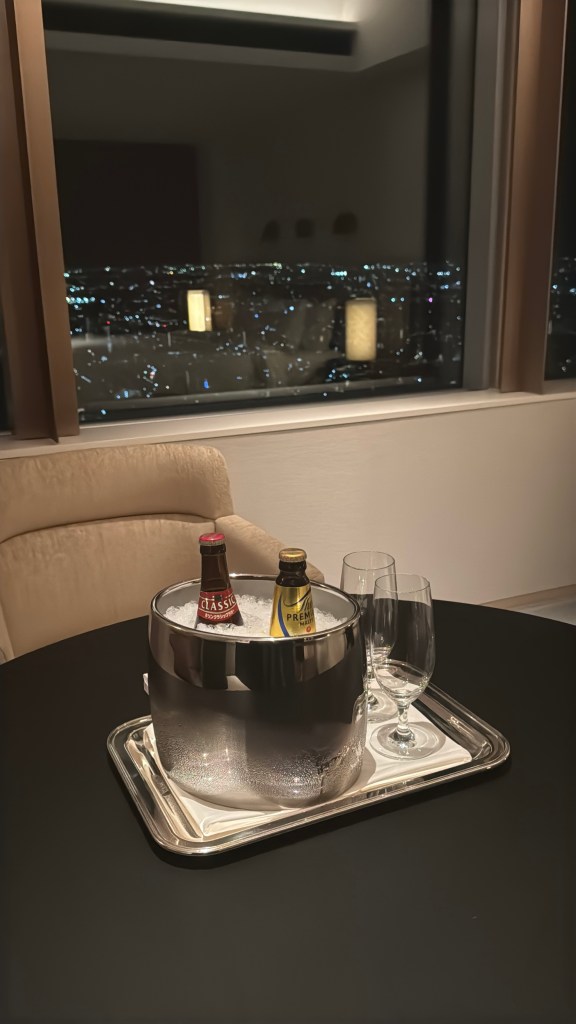
Our room sat on the 46th floor, facing Mount Fuji. By the time we arrived, it was already dark. Tokyo was doing its nightly thing below us, lights stacked on lights, the Opera City towers glowing through the glass like a stage set. Fuji stayed hidden that first night, somewhere beyond the darkness, waiting.
Morning changed everything.
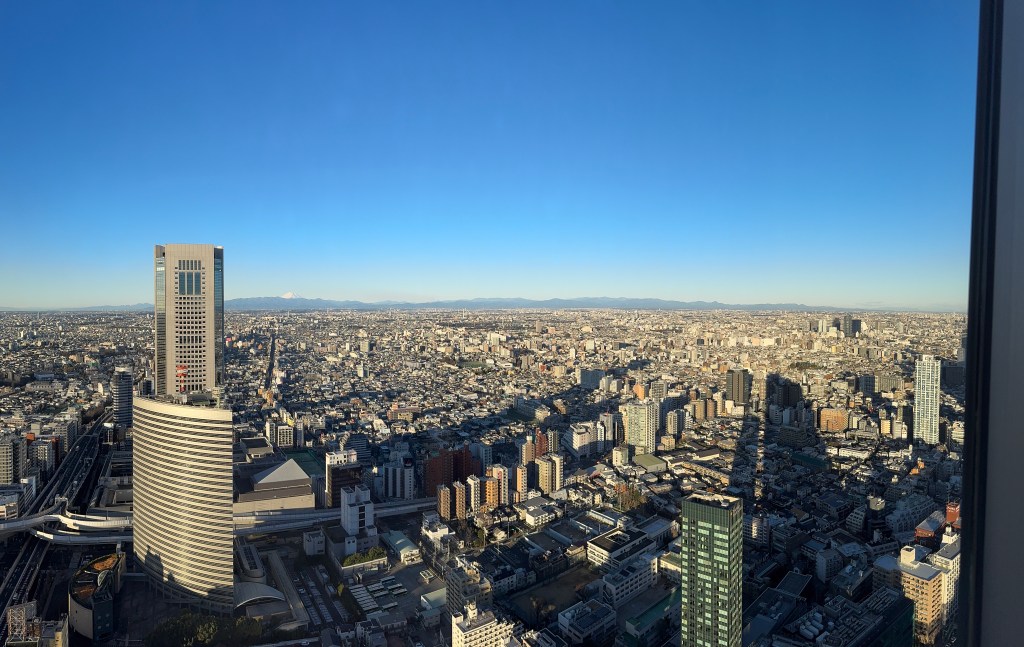
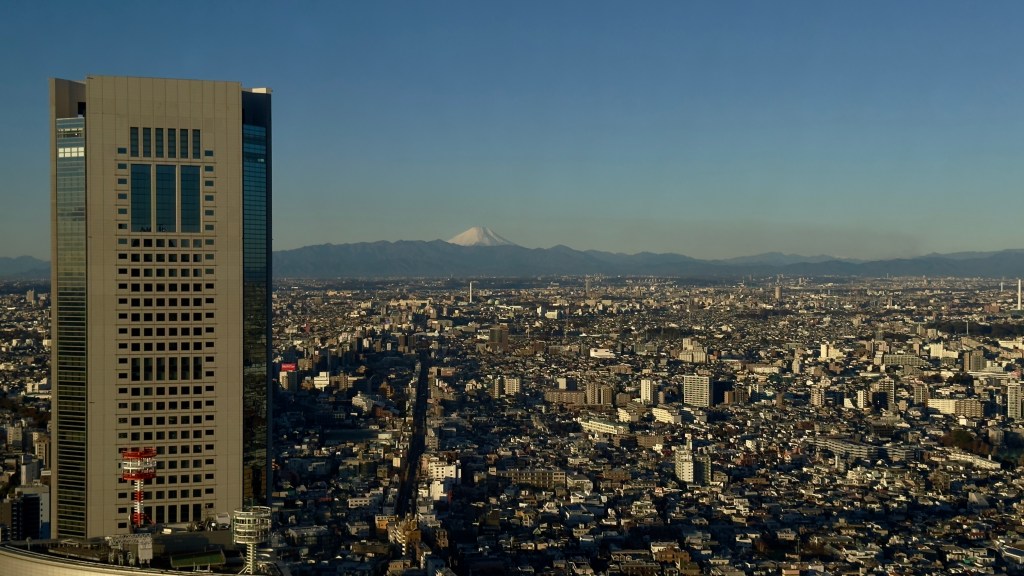
When the light came up, Fuji appeared clean and unmistakable in the distance. No haze. No drama. Just a sharp outline floating above the city like it had always been there and always would be. You don’t get many hotel views that stop you mid-thought. This one does.
This room is where the renovation finally made sense to me.
At check-in, the changes felt subtle. Inside the room, they were obvious. The space is modern now, but it hasn’t abandoned its Japanese restraint. Clean lines. Warm wood. Soft textures. Nothing flashy. Nothing trying too hard. It feels calm in a way that only works when money has been spent carefully.
The layout gives you room to breathe. A proper sitting area by the window. A round table that actually gets used. A couch you sink into instead of perch on. The bed sits low and solid, framed by light that shifts with the time of day. In the afternoon, the room glows. At night, it goes quiet.
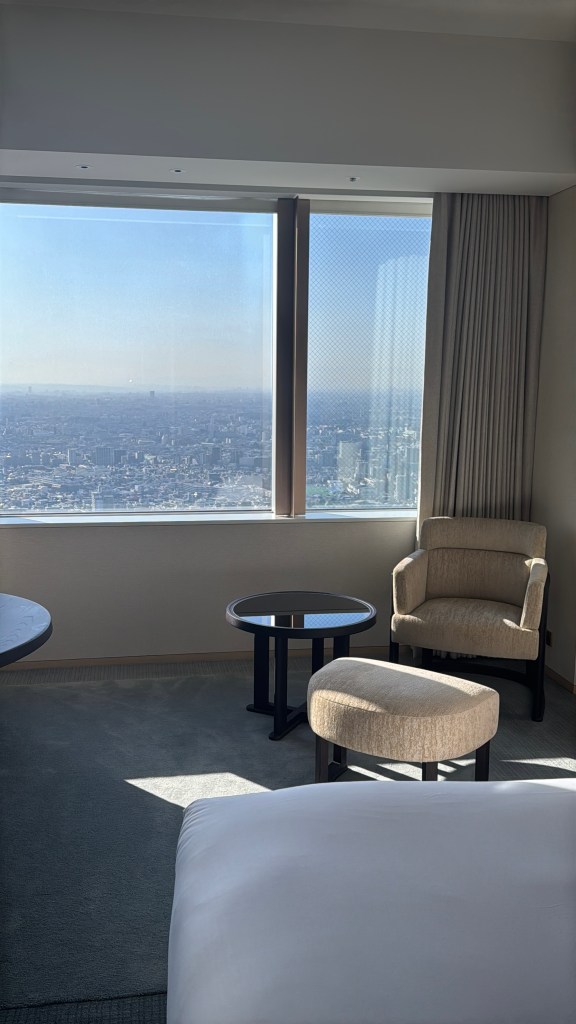
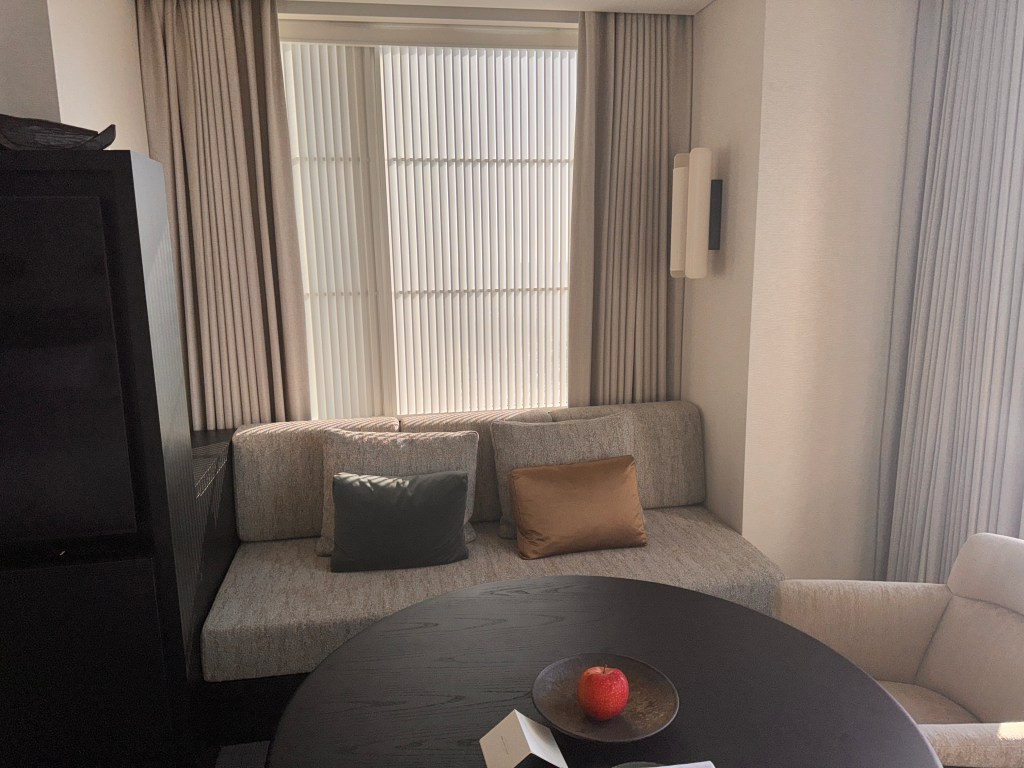
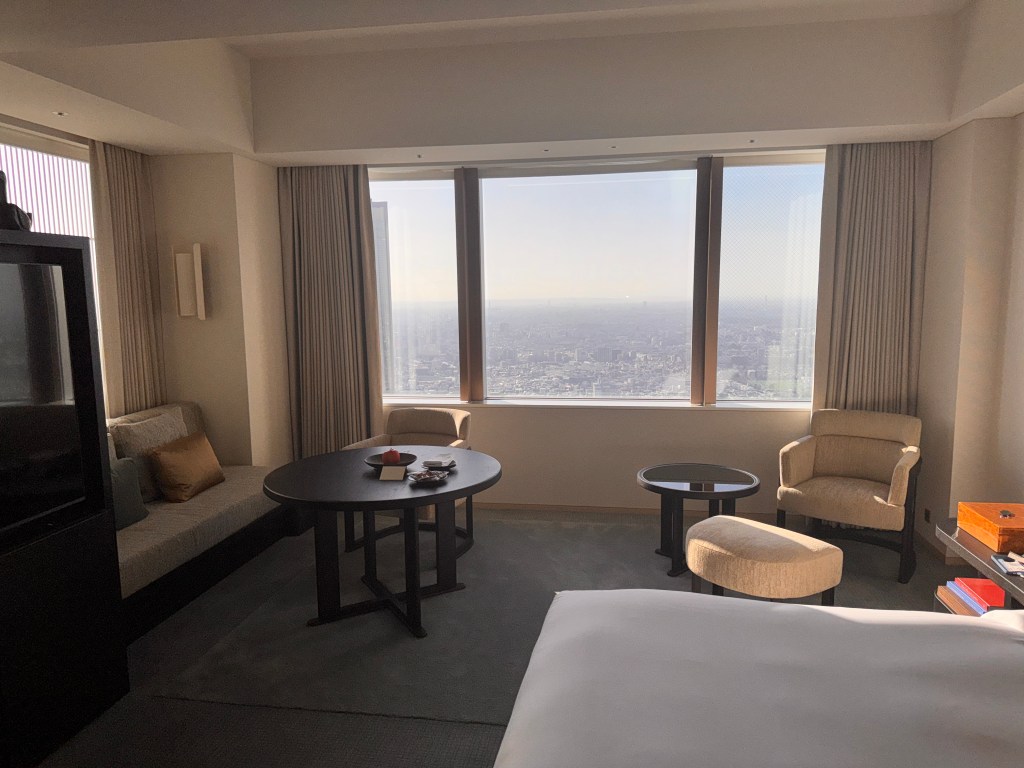
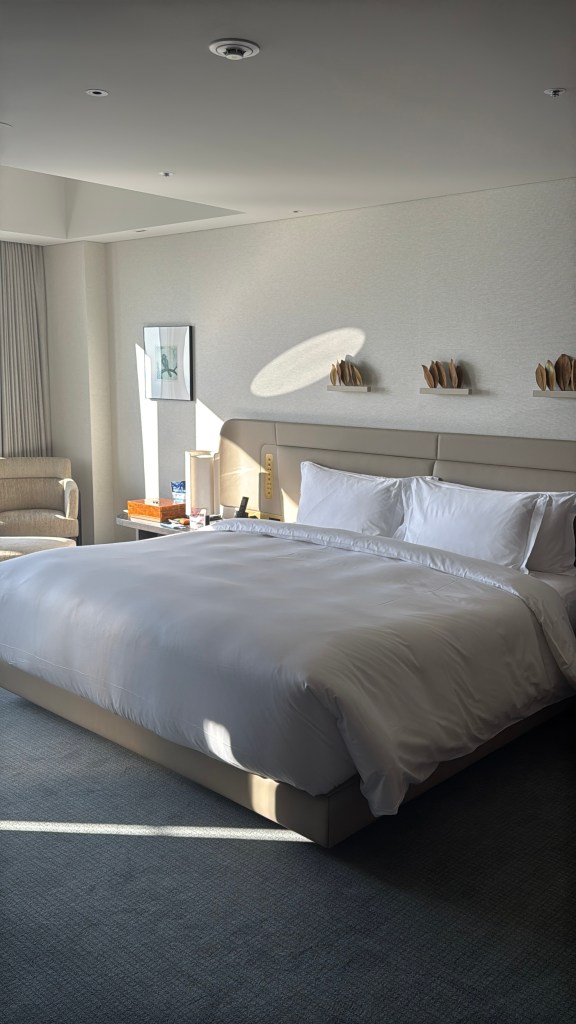
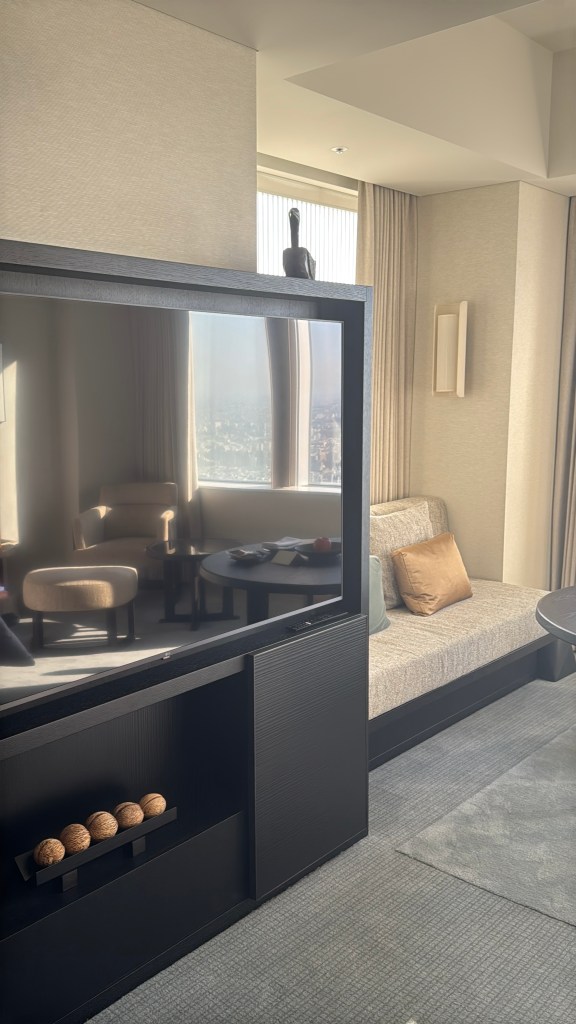
Technology is exactly where you want it and nowhere else. Modern climate control that actually works. USB C outlets where your hands naturally reach. No scavenger hunt. No adapters dangling from the wall.
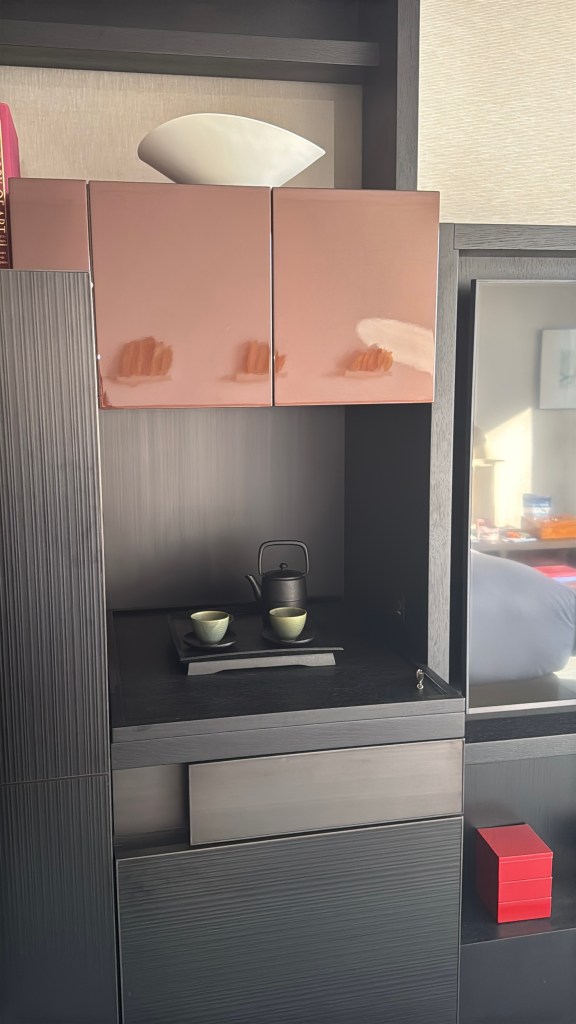
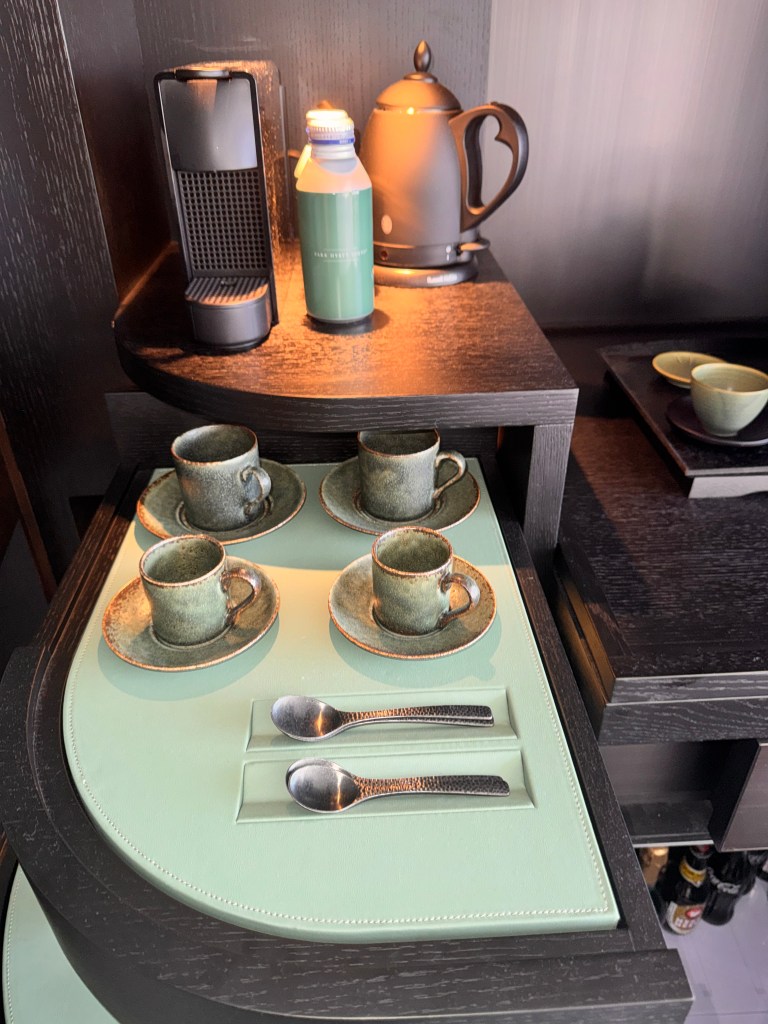
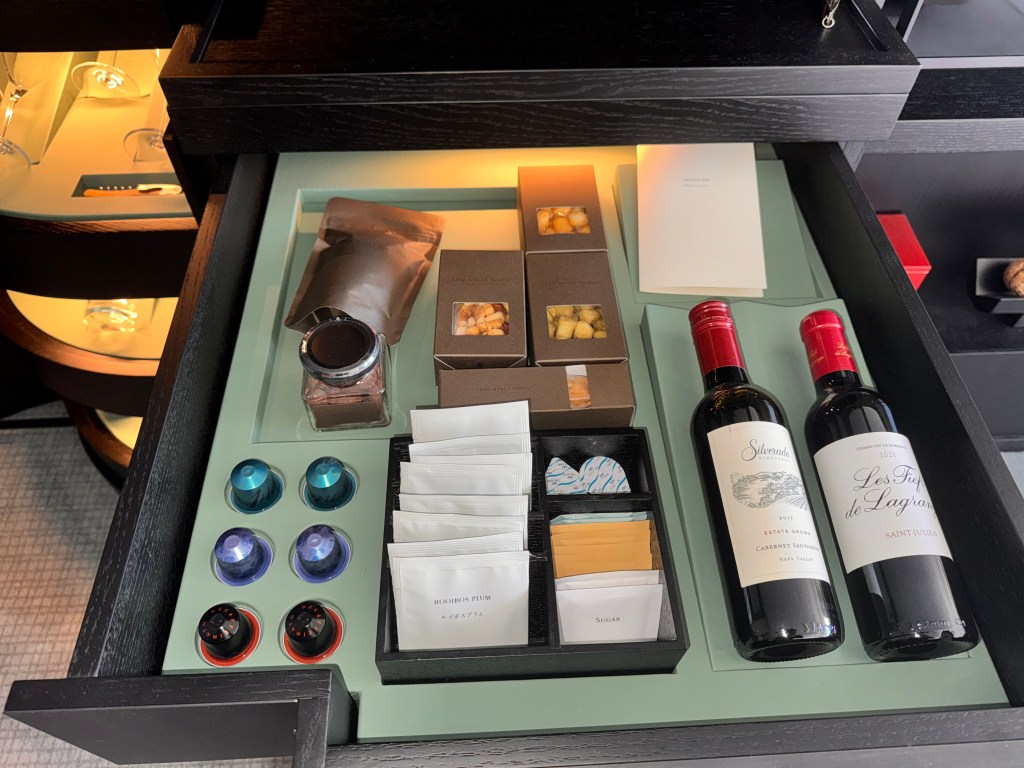
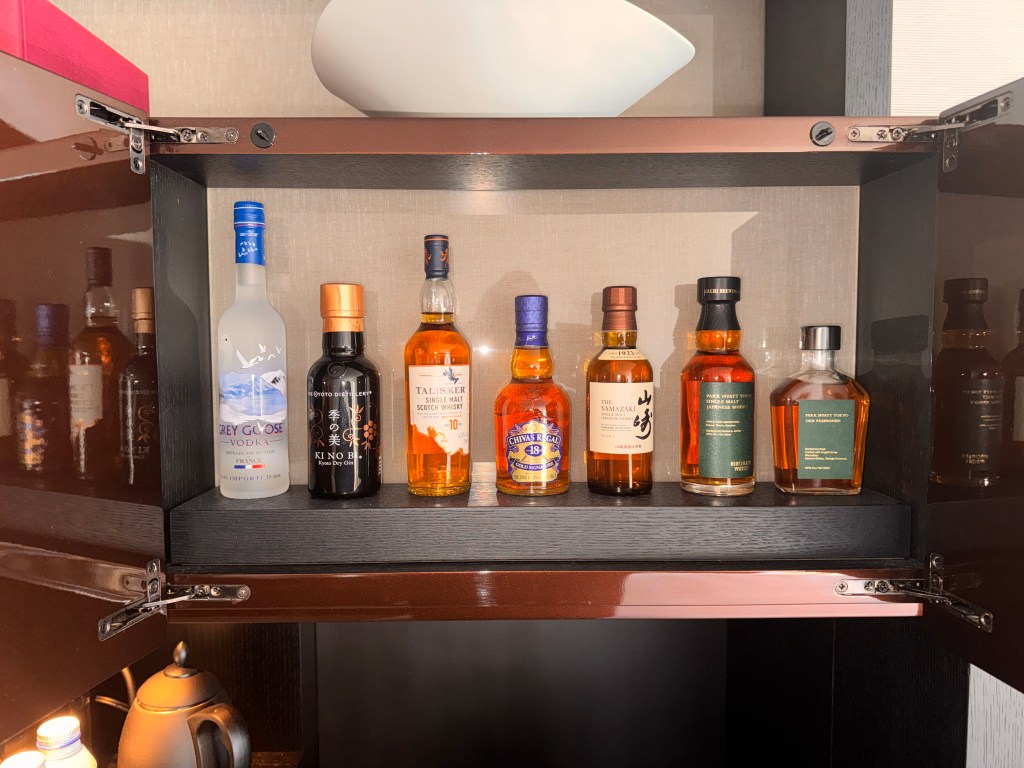
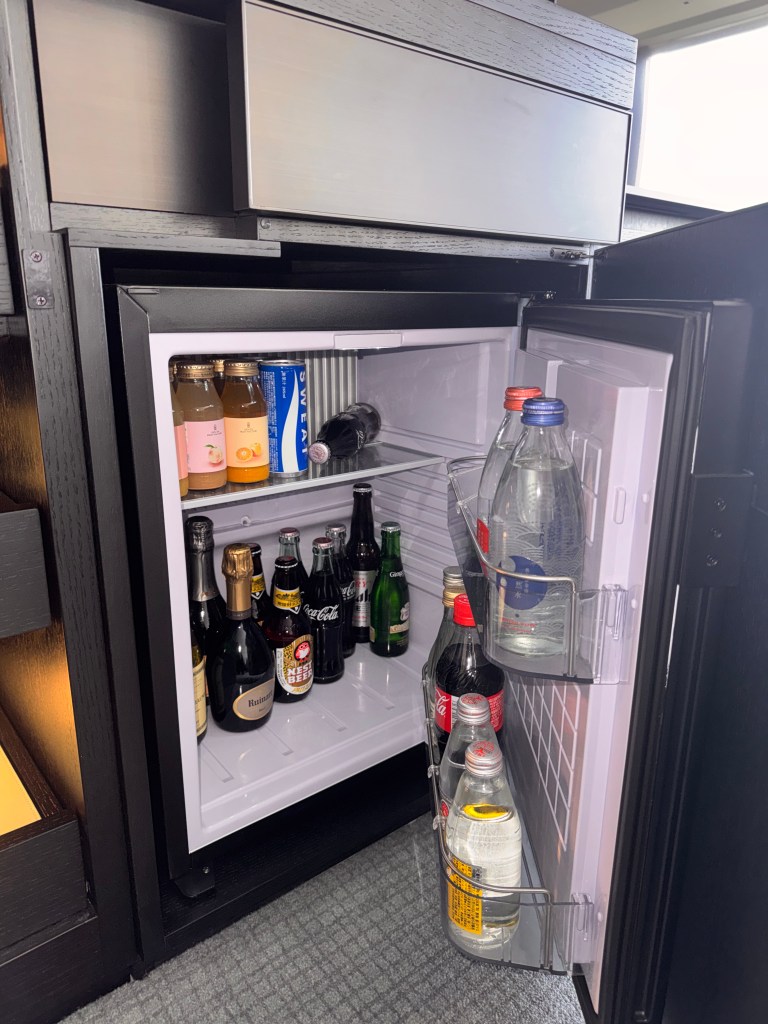
The minibar deserves its own moment. Nespresso, handled. A proper tea setup, also handled. Japanese beer and whisky stocked without apology. Soft drinks. Water. Snacks that feel deliberate instead of decorative. Open the fridge and drawers and you don’t feel judged for touching anything. That matters.
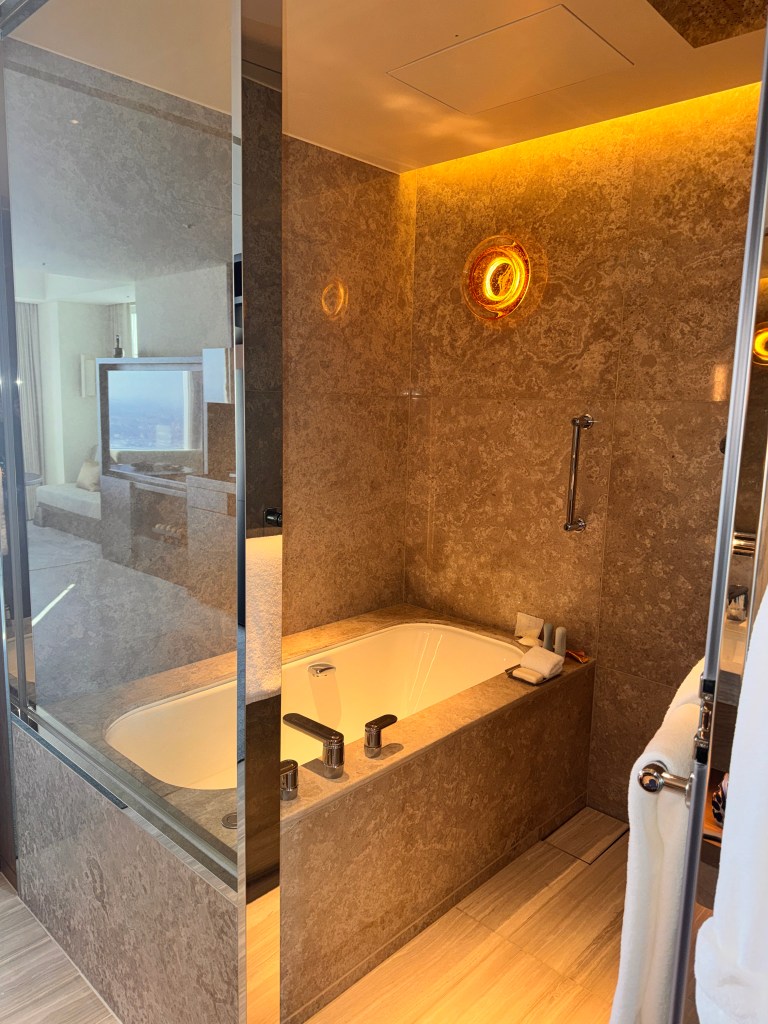
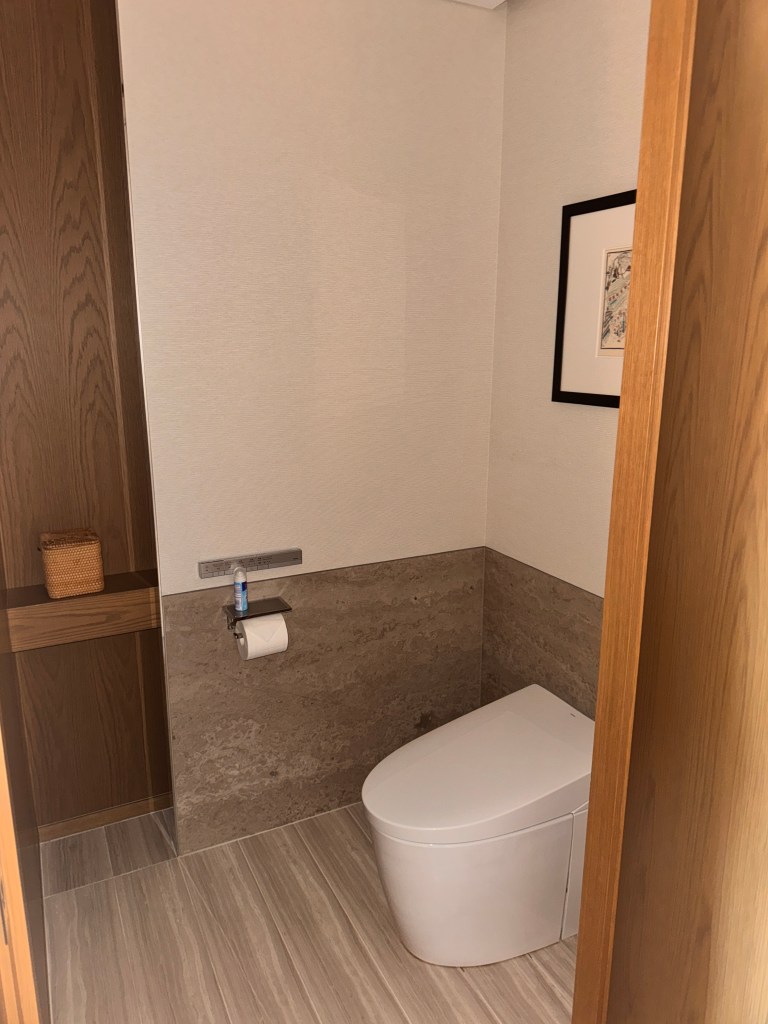
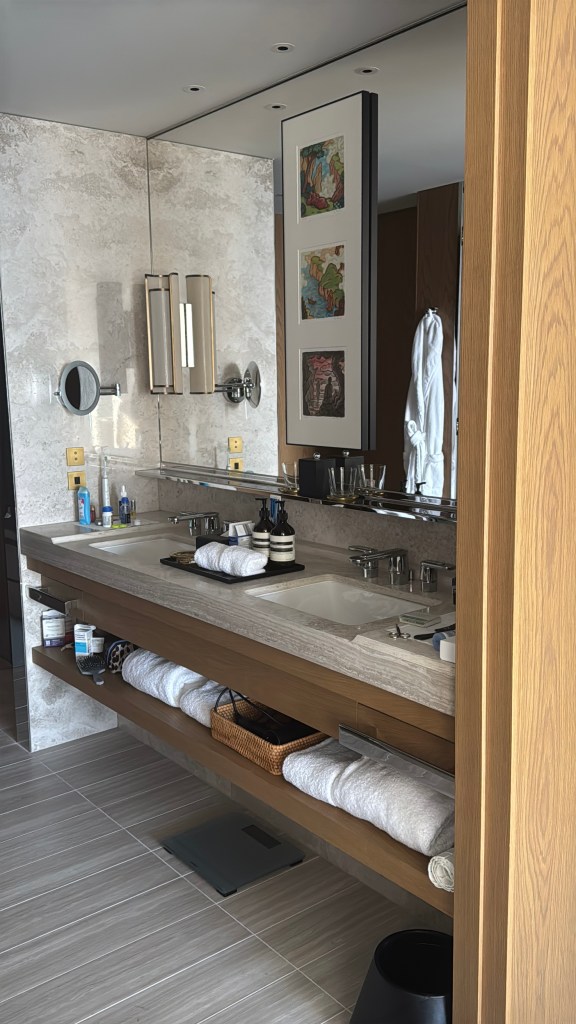
The bathroom carries the same philosophy. Double sinks. Wide counter space. Towels stacked within reach. A soaking tub set behind glass, lit warmly, inviting you to shut the door on the city for an hour. The toilet, of course, does everything short of asking how your day went. This is Japan. You expect competence.
One practical note, and this matters more than you might think.
If you have any say in your floor, ask for the 45th floor. It puts you on the same level as the gym and spa, which is convenient enough. The real advantage shows up at night. From the 45th floor, you can take the dedicated elevator straight up to the New York Bar on the 52nd floor. No down to 41. No long walk. No second elevator. You step in, go up, and arrive where the city spreads out in front of you with a drink in hand.
Small things like that add up over a week.
This room doesn’t shout luxury. It doesn’t need to. It does something harder. It gives you space, silence, and a view that reminds you where you are. When you close the door, Tokyo fades just enough to let you recover. When you open the curtains, it all comes rushing back.
That balance is the real upgrade.
Where We Ate, What We Drank, and What Was Worth Coming Back For
We started with the New York Grill, mostly because that’s what you do. The restaurant sits on the same floor as the New York Bar, on the opposite side, close enough that the live music drifts in like background noise you didn’t order but don’t mind. It sets the mood without hijacking the table.
We skipped the tasting menu and ordered à la carte. I am not a steak person. I eat steak maybe once a year, usually out of obligation or peer pressure. Still, the Hyogo Kobe sirloin was listed as the chef’s recommendation, and when a restaurant like this makes a suggestion, you listen. The price was 31,350 yen, a little over $200. That number gives you pause. Then the steak arrives.
It was the best steak I have ever eaten. Full stop. Perfect texture. Deep flavor. No theatrics. If my next trip to Tokyo doesn’t include a stay at the Park Hyatt, I would still come back here just to eat this steak again. Everything else we had was excellent, but that sirloin is the reason you remember the meal days later.
Next was Kozue. The entrance sits on the 41st floor, but the restaurant itself drops you down to the 40th. The shift is subtle, but the tone changes immediately. The room is quiet and calm in a way that feels intentional. Even with a live band playing at the Peak Lounge nearby, Kozue stayed completely serene. No noise bleed. No distractions.
We ordered à la carte again. I went with the Shokuju, steamed rice, yellowtail, radish, miso soup, and Japanese pickles. My wife ordered the hot pot with Japanese beef sirloin, seri greens, and grated radish. We were warned the yellowtail would take forty minutes. It did. It was worth every one of them. The food here doesn’t rush you, and you shouldn’t rush it either.
Girandole became part of our daily routine, even though we never ate there for lunch or dinner. Breakfast is where it shines. The buffet is generous without being chaotic, and the service never misses a beat. There is something about having a morning espresso by the window, watching Tokyo wake up far below, that resets your entire day.
This is also where my wife had what she described as the best scrambled eggs of her life. Not hyperbole. Not vacation exaggeration. Enough that I later emailed the hotel asking if they would share the recipe. I am still waiting to hear back. That’s how serious it was.
The Peak Lounge and Bar was a mixed experience this time. We skipped afternoon tea, but we did come by for drinks. Their Old Fashioned program is excellent. You choose from Japanese whiskies from different regions, and the staff actually guides you through the options instead of reciting them. The result is a drink that feels personal instead of performative.
Each night we were there, a live band played. This was new since our last visit. The music was good, but I missed what the Peak Lounge used to be, a quiet escape from the energy of the New York Bar. This time around, the line between the two felt thinner.
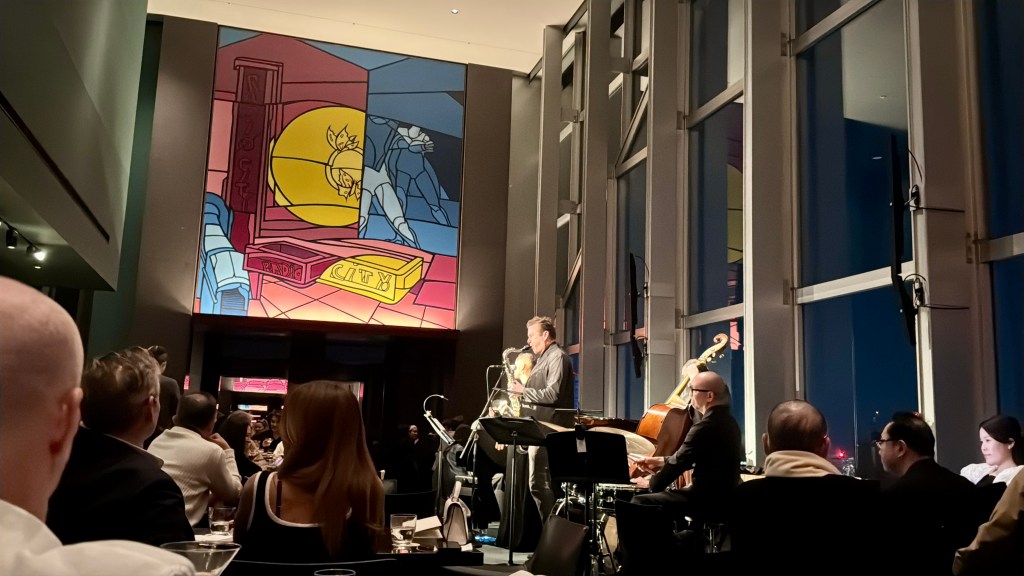
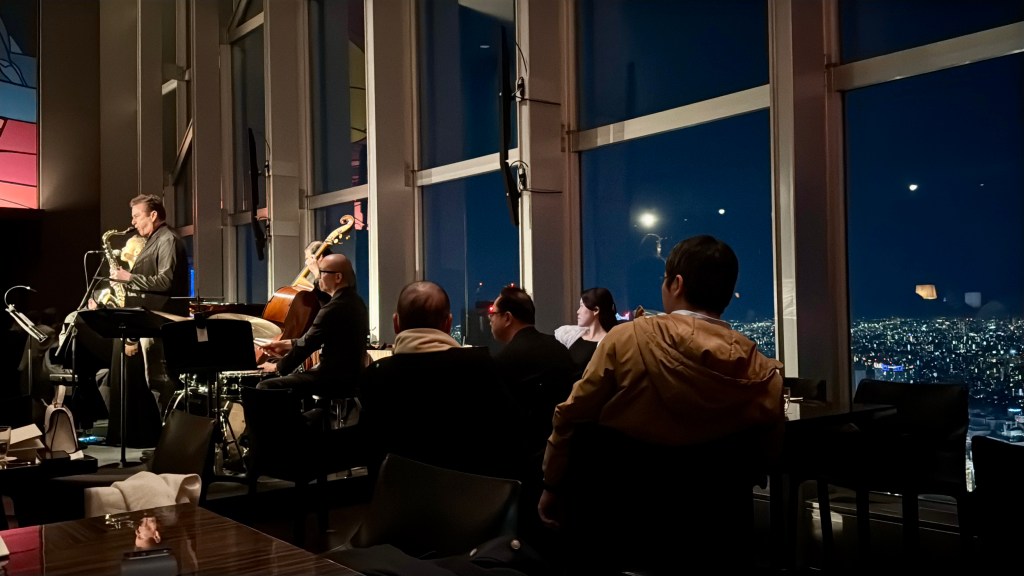
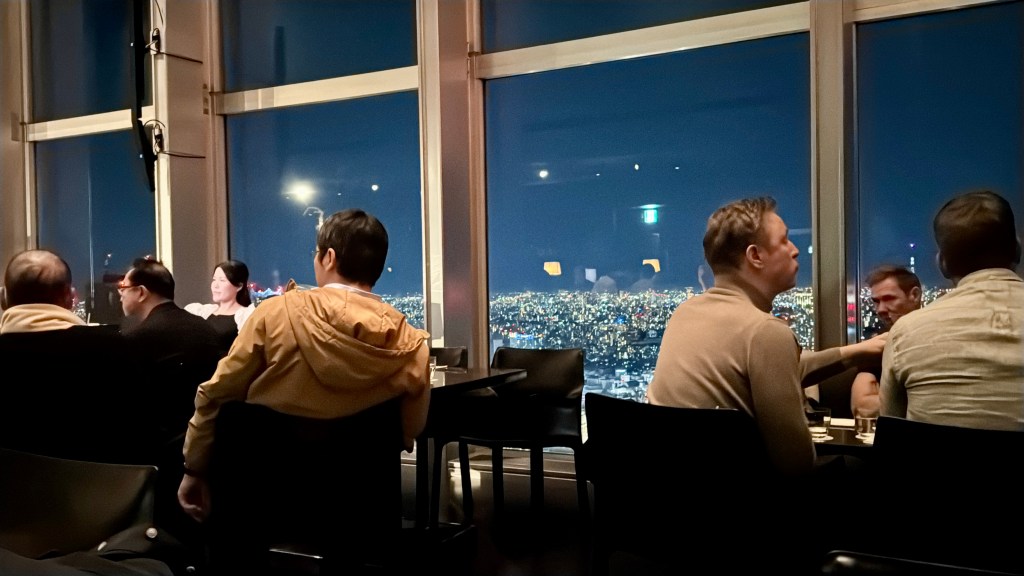
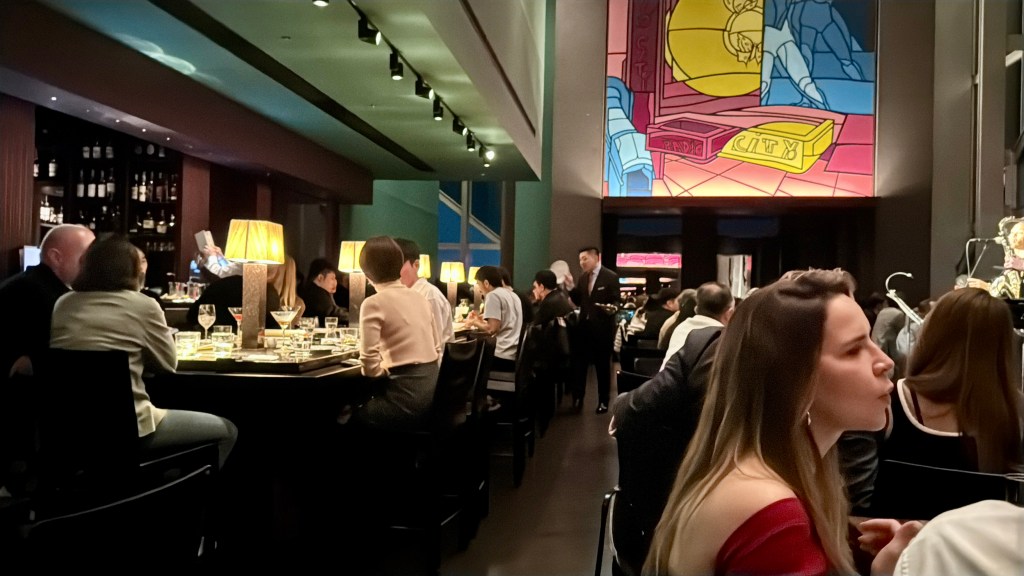
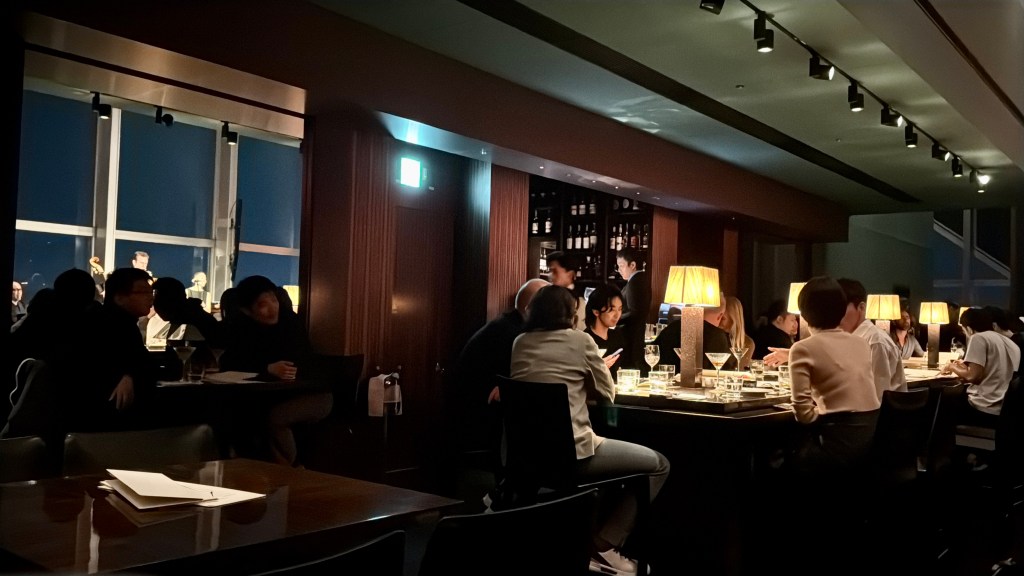
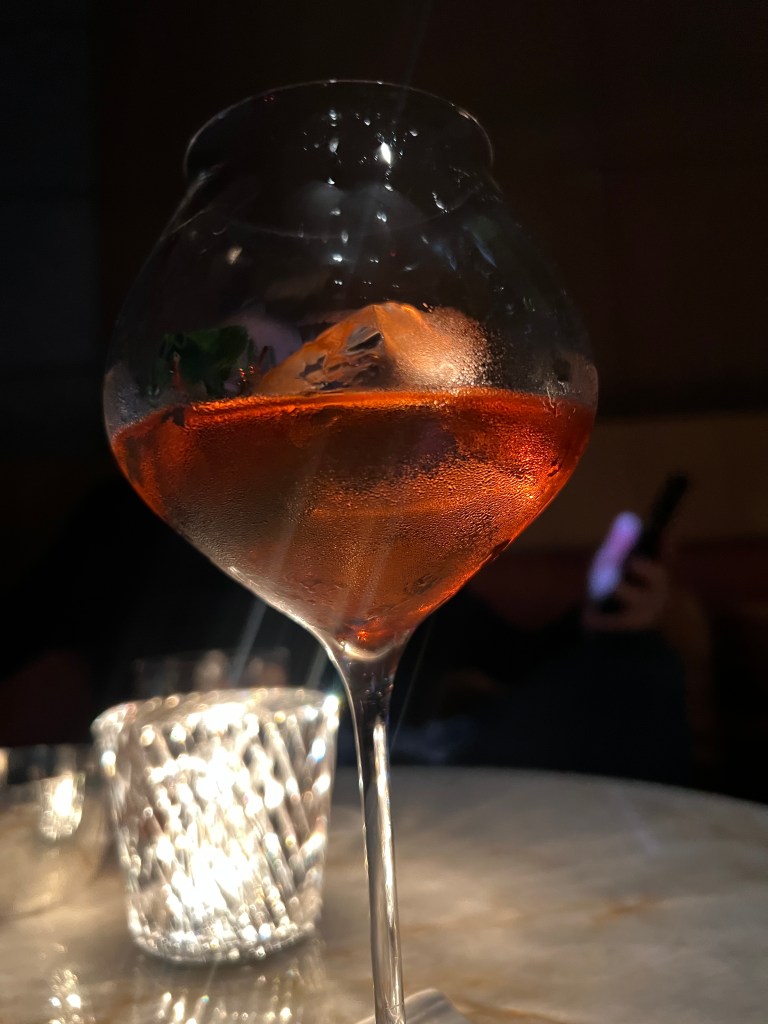
Which brings us to the New York Bar itself. I didn’t notice any meaningful changes, and that’s fine. When something works, you don’t mess with it. The drinks were excellent. The bar snacks delivered. The music still carried the room. The biggest difference was the wait. Maybe because the hotel had just reopened, but this was the shortest line I’ve ever experienced here.
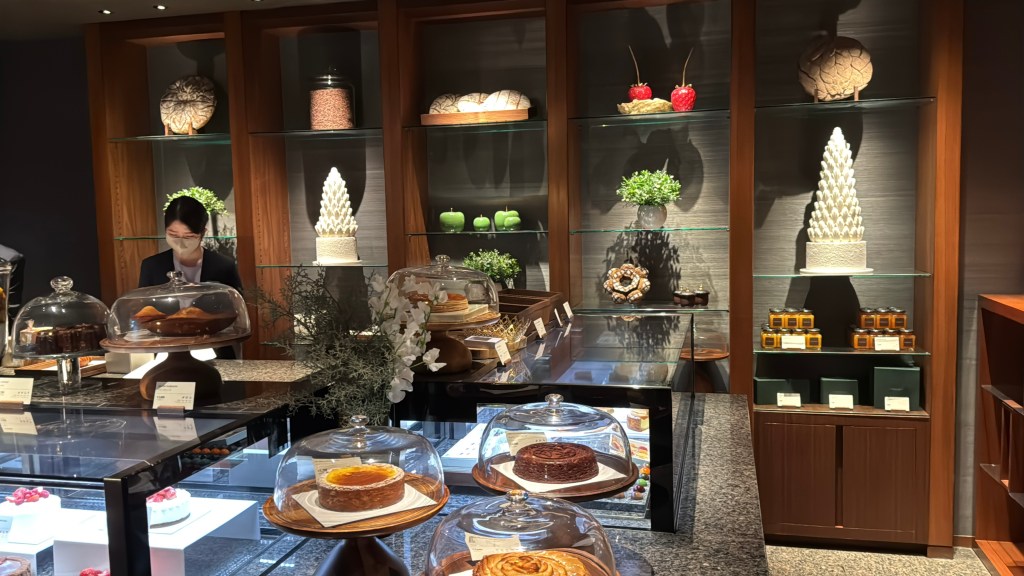
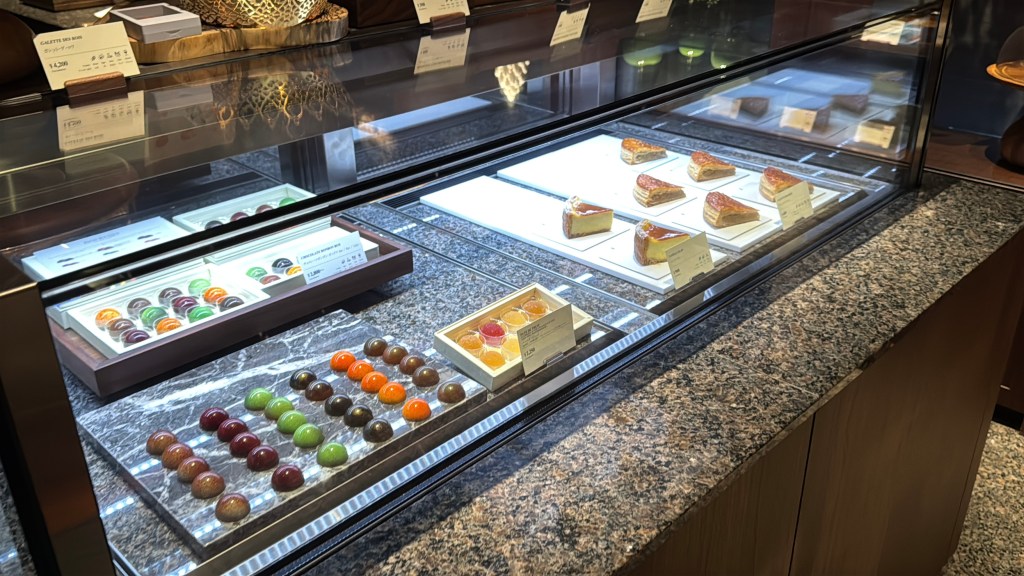
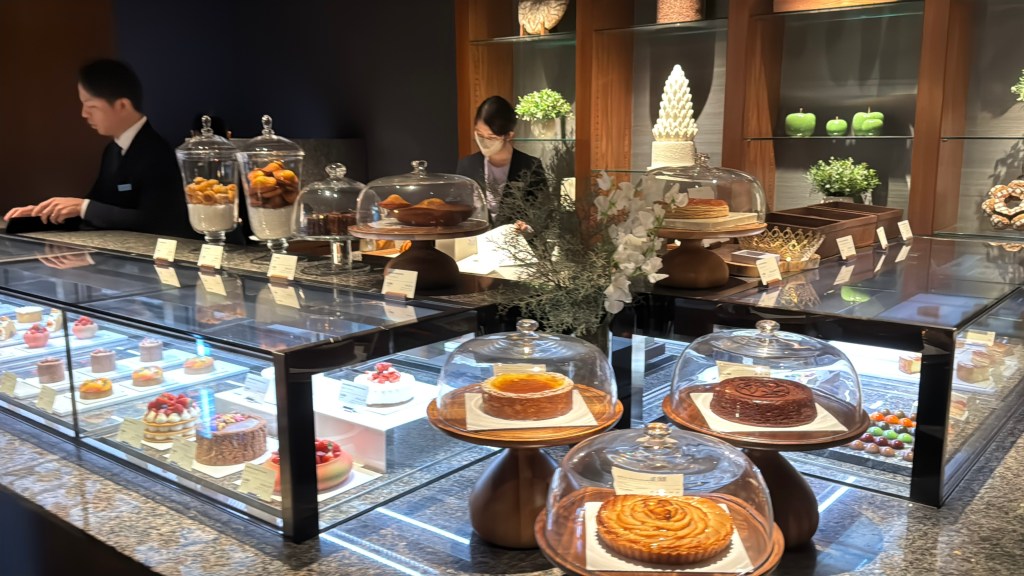
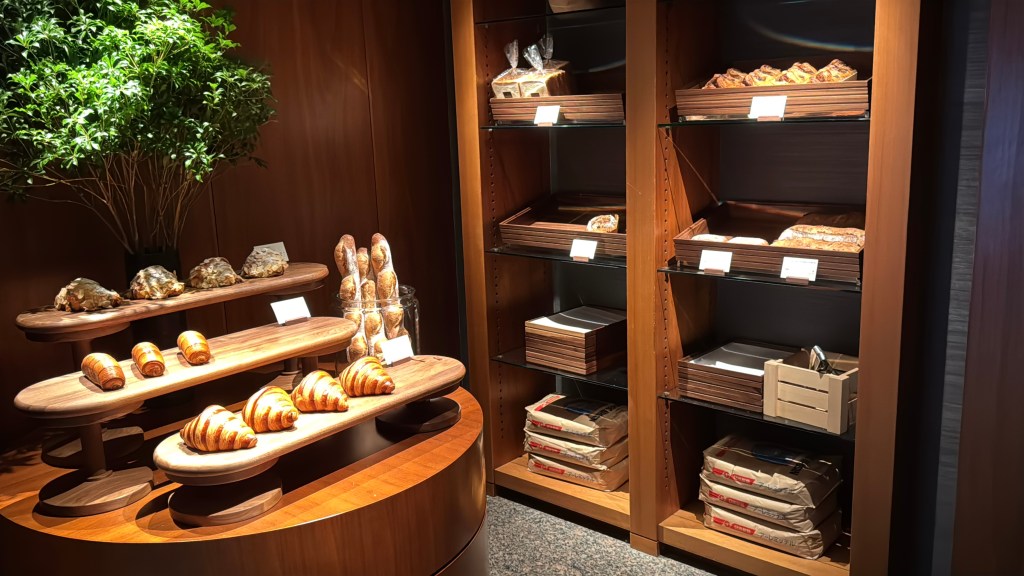
Last stop was the Pastry Boutique on the ground floor. You pass it every time you arrive or leave, and everything looks dangerously good. We waited until our final morning to give in. One last indulgence before heading out. It was worth it. Only then did we discover the small corner dedicated to fresh bread baked in-house. I wish I had known sooner, but maybe it was better this way. One final surprise before saying goodbye.
The food here does more than feed you. It gives structure to your days. It gives you reasons to linger. And occasionally, it gives you something so good you consider planning an entire future trip around a single plate.
The Part Where the Hotel Takes Care of You, Whether You Ask or Not
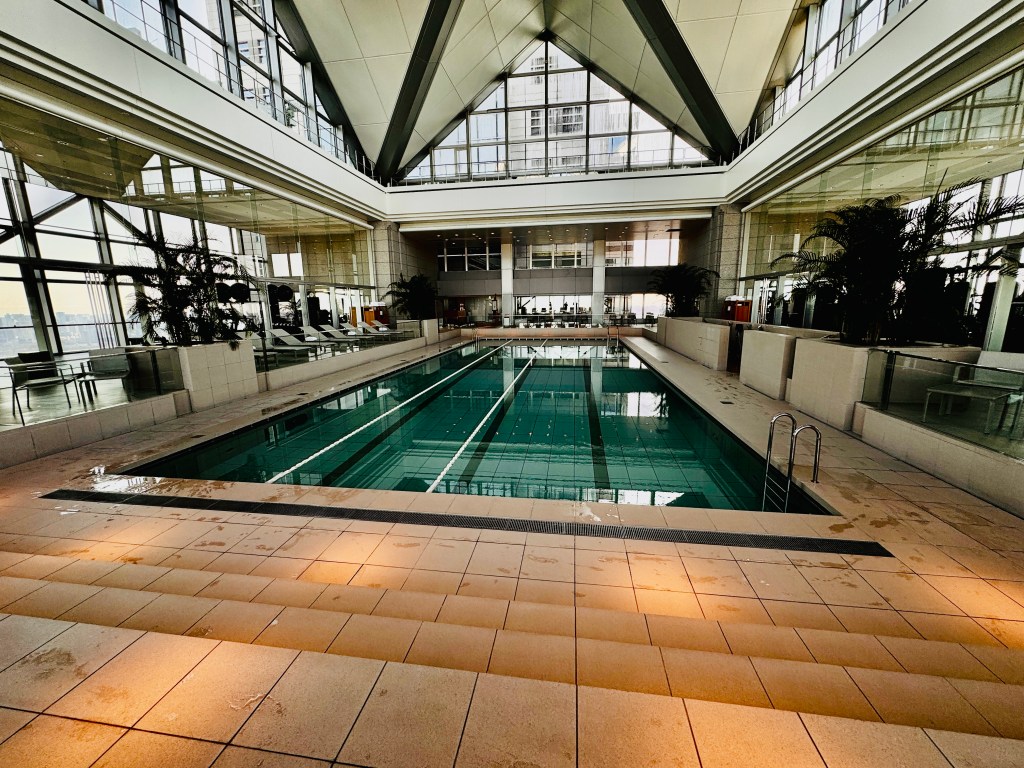
The amenities at the Park Hyatt Tokyo do not announce themselves. They don’t need to. They sit there quietly, waiting for you to realize you should probably use them.
This time, we did.
The spa became a reset button. After a full day in the city, crowded trains, cold air, constant motion, stepping into that space felt like turning the volume down on Tokyo. Treatments are handled with calm confidence. No sales pitch. No upsell. Just competent hands and the assumption that you know why you’re there.
The pool quickly became a morning ritual. Floor to ceiling windows. The city laid out below you. A few early risers moving quietly through the water. It’s the kind of place that makes you forget what time it is, which is dangerous in the best way. You float. You stare out. You remember that travel doesn’t always need to be loud.
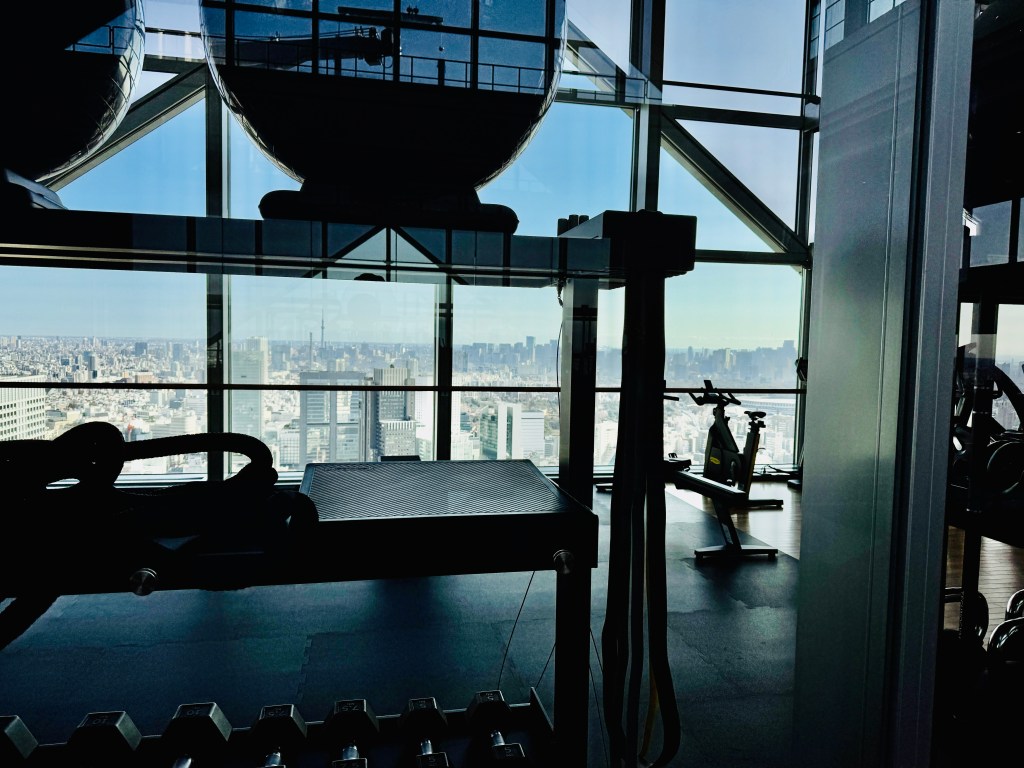
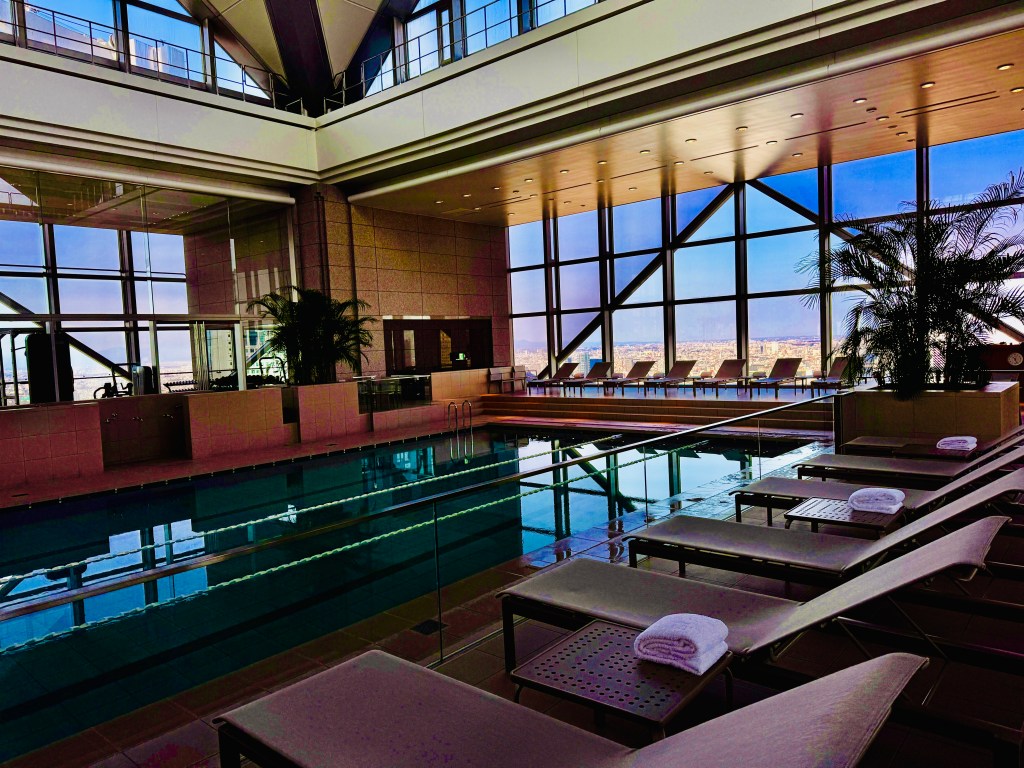
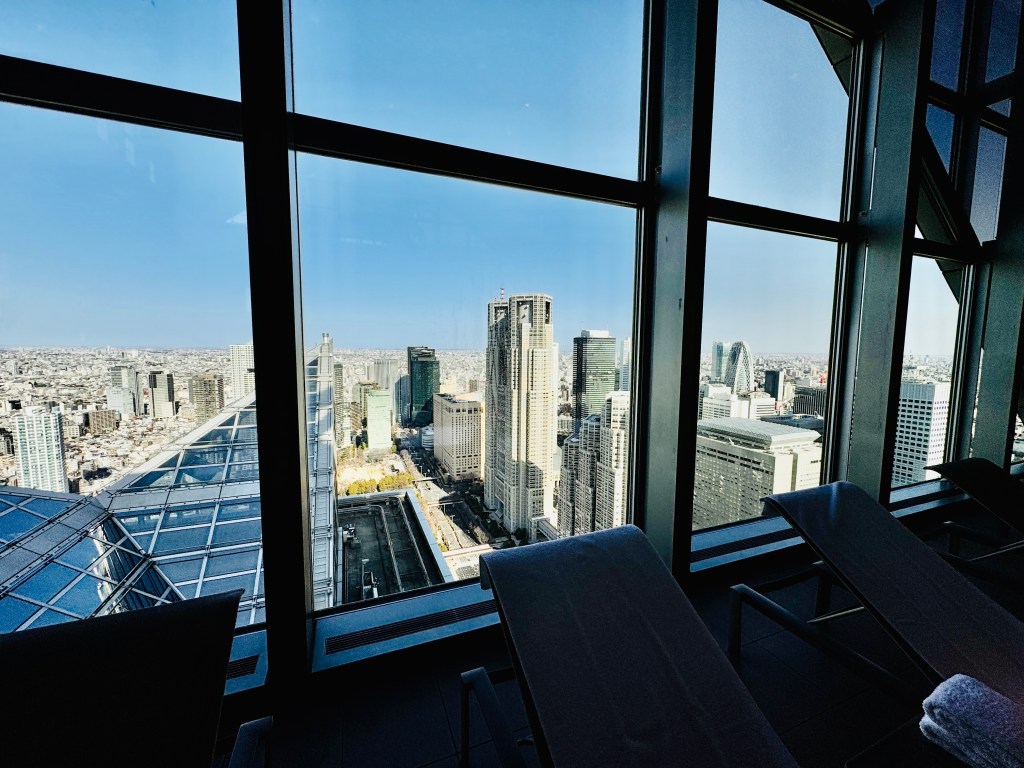
The gym sits above the city as well and stays open whenever you decide you need it. No reservations. No pressure. You show up when you want. You leave when you’ve had enough. That freedom matters more than fancy equipment.
What really separates the Park Hyatt from the other Hyatt properties in Tokyo is service. Not the performative kind. The constant, quiet presence kind. There is always someone nearby. Ready to help. Ready to guide. Occasionally ready when you would rather be left alone, which is the price you pay for staying somewhere like this.
One morning, while we were having coffee, the guest services manager made her way around the room. She didn’t ask about the hotel. She asked about Tokyo. What we were doing. What we wanted to see. What she could do to make the trip better.
This was not small talk.
At another table, a guest asked if she could help secure tickets to see Blackpink at the Tokyo Dome. The response was immediate. No hesitation. No qualifiers. Just yes.
When she reached us, she asked about our plans. Sumo. She asked if the front desk had arranged the tickets. I told her I had booked them myself. She smiled and gently mentioned that the hotel could have handled it. She wasn’t wrong. It would have saved me time. And probably stress.
That’s the difference here.
The Park Hyatt doesn’t just give you a place to sleep. It offers to carry part of the mental load. Sometimes you accept. Sometimes you don’t. But the offer is always there.
You can explore Tokyo on your own terms, or you can let the hotel smooth the edges when you’re tired. Either way, it works. And after a few days, you realize how rare that balance actually is.
Final Take, and Why I’d Do It All Over Again
Here’s the problem with a stay like this. It leaves you with very little to argue about.
From the moment we arrived to the moment we left, I couldn’t find a real fault. Not a meaningful one. This was one of the best hotel experiences I’ve ever had, and I don’t say that lightly. It worked on every level that mattered. Comfort. Service. Atmosphere. The rare feeling that nothing was slipping through the cracks.
Even the one thing I flagged earlier, the live bands at the Peak Lounge, didn’t land as a true complaint. I expected quiet and got music. But the music was good. Really good. It’s hard to be annoyed when the unexpected turns out to be well done.
Yes, it’s expensive. You already know that before you book. This is not a hotel where you pretend otherwise. But here’s the thing. The prices make sense once you’re there. I never looked at a menu and felt insulted. I never felt taken advantage of. Everything cost what it should have cost for the level of care, quality, and execution behind it. You get what you pay for, and in this case, that’s meant in the best possible way.
I don’t know if my next trip to Tokyo will allow for a stay like this. Reality has a way of asserting itself. But if I can make it work, I will. And if you’re considering it and have the means, you should too.
The Park Hyatt Tokyo once played a supporting role in Lost in Translation. After this renovation, it’s done waiting in the background. It’s ready for top billing.
 The Hyatt Enthusiast